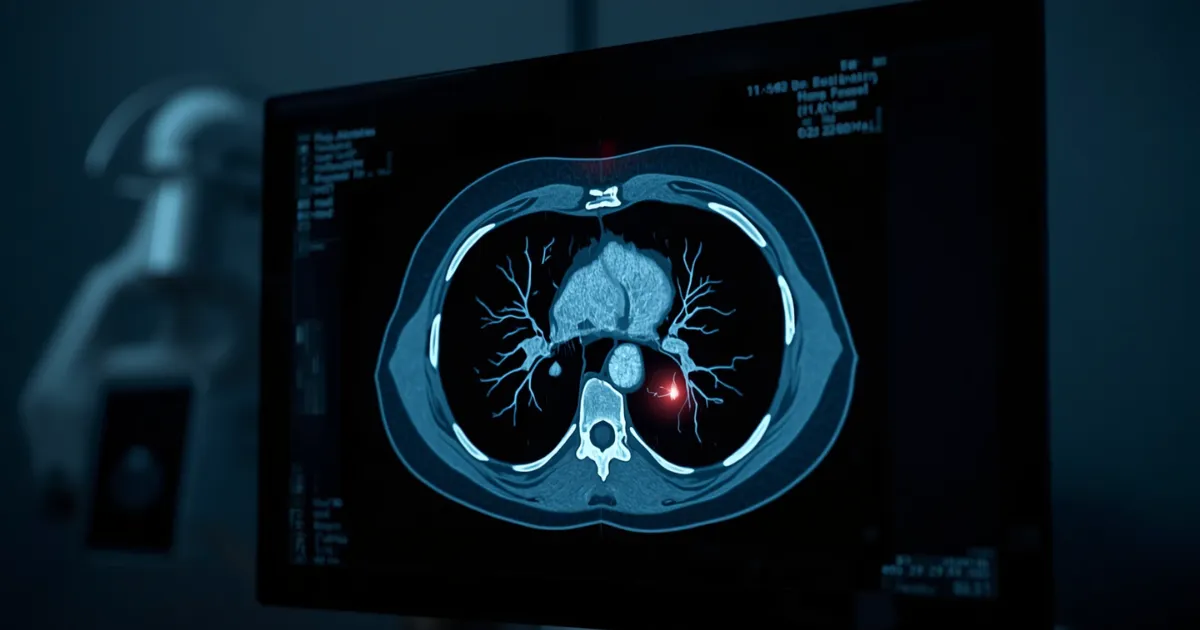
AI catches disease patterns in scans that a tired radiologist, staring at their two-hundredth chest X-ray of the day, can miss. That’s the whole story in one sentence. The rest is about how it actually works, where it’s already saving lives, and where it still falls short.
Software trained on millions of prior images now flags a suspicious lung nodule, a shrinking hippocampus, or a diabetic eye before a patient has any symptoms at all. Radiologists still make the call. But the software gets there first, and increasingly, it gets there right.
What “AI Imaging Detection” Actually Means
Most of this technology runs on convolutional neural networks, a type of deep learning built to recognize visual patterns. Feed the network enough labeled mammograms, CT scans, or retinal photos, and it learns to spot the pixel-level signatures of disease that correlate with confirmed diagnoses.
It’s not magic. It’s pattern-matching at a scale no human eye can manage. A radiologist reads a few thousand images across a career-defining specialty. A trained model has effectively “seen” millions before it ever touches a real patient’s scan.
The output isn’t a diagnosis. It’s a probability score, a highlighted region, or a triage flag that tells a clinician where to look first.
Where AI Is Already Catching Disease Early
Breast cancer. This is the most mature use case. In the Swedish MASAI trial, a single radiologist working with AI support found cancers that two radiologists working together missed, according to interim results published in The Lancet Oncology in 2026. A separate multicenter study evaluating Google’s mammography AI system across UK NHS screening sites reported cancer detection climbing from 7.54 to 9.33 cases per 1,000 women screened, with the AI catching 25% of cancers that had previously slipped through as interval cases. In May 2026, the FDA cleared ArteraAI Breast, a digital pathology tool for risk stratification in early-stage HR-positive, HER2-negative breast cancer, the first tool of its kind to get that clearance.
Lung cancer. CNNs applied to low-dose CT scans flag pulmonary nodules and generate malignancy-likelihood scores, a workflow now common enough in lung cancer screening programs that radiologists at several major health systems treat AI triage as a standard second read rather than a novelty.
Diabetic retinopathy. A retinal photo, run through a deep learning model, can hit above 90% sensitivity for detecting diabetic retinopathy, and the same scan doubles as an early signal for cardiovascular risk when analyzed for vascular patterns, per findings on AI-driven retinal imaging published in 2026.
Alzheimer’s and neurodegeneration. Algorithms trained on brain MRI can pick up subtle grey matter shrinkage and atrophy patterns tied to early cognitive decline, years before a standard clinical exam would raise a flag.
Stroke. AI-assisted stroke detection tools are now reporting sensitivity above 98% in some deployments, and hospitals using them report cutting time-to-treatment by up to 60% in triage workflows, a difference that matters enormously given how stroke outcomes hinge on minutes, not hours.
The Gap Competitors Don’t Talk About: Who Actually Reads the AI’s Flag
Most articles on this topic stop at “AI finds cancer early.” The harder, less-discussed question is what happens after the software raises a flag.
An AI system doesn’t get sued for a missed diagnosis. A radiologist does. That single fact shapes how these tools are deployed far more than the accuracy numbers suggest. Every FDA-cleared imaging AI tool in the US is cleared as an assistive or concurrent reader, not an autonomous one. The radiologist remains the legally accountable party, which means AI’s real-world value depends heavily on whether the human reviewing its output trusts it enough to act on it, and distrusts it enough to catch its mistakes.
That tension shows up in the data. The EARLIEST-AI retrospective study found that when AI markings disagreed with a radiologist’s own read, the radiologist’s judgment usually won, even in cases where the AI was later shown to be correct. Trust, not raw sensitivity, is turning out to be the actual bottleneck in early detection imaging.
Accuracy Numbers, With Context
Numbers without context are marketing. Here’s what the current evidence actually shows, year attached:
- Lunit’s mammography AI reported an area-under-the-curve of 0.956 for breast cancer detection in 2026 site data, and combined AI-plus-radiologist reading pushed sensitivity to 88.6% while holding specificity at 93%.
- RadNet’s breast arterial calcification module, cleared by the FDA in 2026, hit 90% sensitivity and 88% specificity across patients with varying breast density.
- A fine-tuned MobileNetV2 model for skin lesion classification, trained on the ISIC 2019 dataset, achieved 89.3% accuracy in a 2026 multimodal diagnostic study.
None of these numbers mean the AI is “better than doctors.” They mean AI catches a different, partly overlapping set of cases than a human reader does, which is exactly why pairing the two outperforms either alone.
Accessibility: The Part Screening Statistics Leave Out
High sensitivity numbers matter less if the scan never happens. A chunk of early detection’s real-world impact right now is happening not in academic hospitals but in decentralized settings, where AI-driven point-of-care testing is pushing rapid, accurate diagnostics closer to where patients actually are, cutting the lag between symptom and screening that centralized labs have always struggled with.
That shift matters more in regions with radiologist shortages than any single accuracy improvement does. A 94% sensitive algorithm helps nobody if there’s no scanner or specialist within a day’s travel.
Where This Breaks Down
AI models trained mostly on data from a handful of well-resourced health systems don’t generalize cleanly to different populations, scanner brands, or imaging protocols. A model tuned on one hospital’s mammography equipment can lose accuracy when deployed on another vendor’s machines, a problem researchers call domain shift.
Bias in training data is the other recurring failure point. If the dataset underrepresents certain skin tones, breast densities, or age groups, the model’s blind spots mirror those gaps, and nobody notices until real patients are affected.
Regulatory clearance also lags reality. Most AI imaging tools are FDA-cleared as assistive readers, which means the clearance pathway (usually 510(k)) tests for substantial equivalence to existing tools, not for independent diagnostic authority. That’s a meaningfully lower bar than full approval, and it’s worth knowing before assuming “FDA-cleared” means “as rigorously tested as a new drug.”
What Changes for Patients and Clinicians Right Now
If you’re getting a mammogram, CT lung screen, or diabetic eye exam at a major health system in 2026, there’s a real chance AI already touched your scan before a human did. It won’t replace the radiologist’s signature on your report. It will, increasingly, be the reason that signature comes with a flagged region circled and a confidence score attached.
For broader context on where imaging hardware itself is headed alongside these AI layers, our deep dive on medical imaging technology advances in diagnostics covers the photon-counting CT and real-time MRI innovations running in parallel with AI-assisted reads.
People Also Ask
Can AI detect cancer earlier than a doctor?
In several studies, yes, particularly for breast and lung cancer, AI has flagged cases that a single radiologist missed. But the strongest results come from AI paired with a human reader, not AI working alone.
Is AI used in MRI scans?
Yes. AI models analyze MRI data for conditions including Alzheimer’s-related brain atrophy, tumor detection, and cardiac abnormalities, often reducing scan interpretation time alongside faster real-time MRI hardware.
How accurate is AI in reading medical images?
Accuracy varies by condition and dataset. Reported sensitivity ranges from roughly 85% to above 98% depending on the disease and imaging modality, with combined human-plus-AI reading typically outperforming either alone.
Does AI replace radiologists?
No. Every FDA-cleared imaging AI tool in the US is cleared as an assistive or concurrent reading aid. The radiologist remains the accountable decision-maker.
What diseases can AI detect through imaging?
Confirmed use cases include breast cancer, lung cancer, diabetic retinopathy, cardiovascular risk from retinal scans, Alzheimer’s-related brain changes, stroke, and pulmonary fibrosis.
FAQs
What is early disease detection imaging?
It’s the use of medical scans, X-ray, CT, MRI, ultrasound, or retinal photography, to catch signs of disease before a patient shows symptoms. AI adds a pattern-recognition layer on top of these scans, flagging subtle changes a human reader might not catch on a first pass, especially across a high scan volume.
How does AI actually analyze a medical scan?
A convolutional neural network is trained on large sets of labeled prior scans, images where the outcome is already confirmed. It learns which pixel patterns correlate with disease. When it processes a new scan, it outputs a probability score or highlights a region of concern for a radiologist to review, rather than issuing a diagnosis itself.
Is AI-assisted imaging available at regular hospitals now?
Increasingly, yes. Breast imaging AI has at least eight FDA-cleared products in the US spanning mammography, tomosynthesis, and MRI, and lung nodule detection AI is standard in many screening programs. Availability still depends heavily on the health system’s budget and imaging equipment.
What are the biggest risks of relying on AI for early detection?
Bias from unrepresentative training data, reduced accuracy when a model is used outside the population or equipment it was trained on, and the risk that clinicians either over-trust or under-trust the AI’s flags. Regulatory clearance also tends to be narrower in scope than headlines suggest.
Will AI imaging detection get cheaper and more accessible?
Costs are trending down as more tools reach FDA clearance and compete for hospital contracts, and point-of-care AI diagnostics are extending some of this capability to lower-resource settings. Full parity with centralized specialist care is still years out in most regions.


KEEP READING

How to build an AI governance framework comes down to four written decisions for every AI system: who owns it, which risk tier it sits in, what approval it needs, [...]

AI Agents vs. Chatbots: Avoid the Costly Mismatch AI agents vs. chatbots comes down to who chooses the next step. A chatbot returns one reply per input. An AI agent [...]

Small language models (SLMs) are AI text models with roughly 1 million to 10 billion parameters, according to Hugging Face's 2025 overview, small enough to run on a phone, a [...]

AI ethics and bias mitigation mean defining fair outcomes, testing for gaps, and fixing them across the three stages in NIST's 2022 SP 1270. Those stages are pre-design, design and [...]

An AI governance framework is the set of policies, risk tiers, and approval gates that decides which AI systems your organization can ship and which ones need a human sign-off [...]