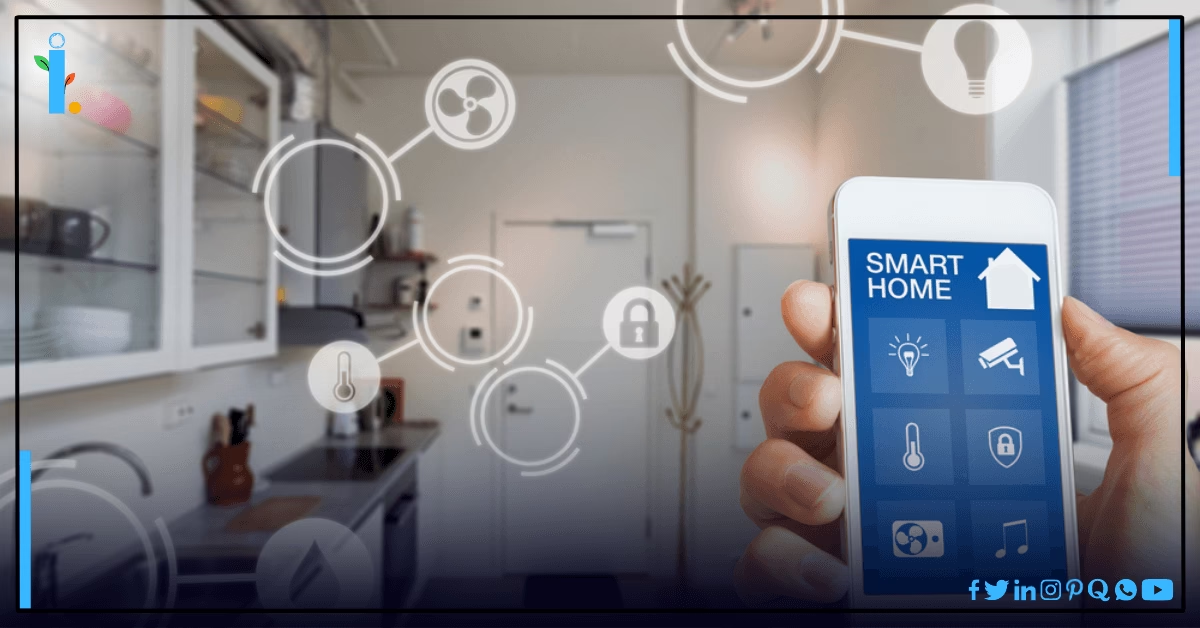
The Internet of Things (IoT) refers to the network of interconnected devices and objects that communicate and exchange data with each other over the Internet. It encompasses many smart devices, sensors, and systems, enabling seamless connectivity and automation. The concept behind IoT is to enhance efficiency, improve decision-making processes, and simplify daily life by integrating technology into various aspects of our lives.
The Impact of IoT on Daily Life
IoT has significantly transformed our daily lives, revolutionizing the way we interact with technology. From smart homes and wearable devices to connected cars and intelligent healthcare systems, IoT has made our lives more convenient, efficient, and interconnected. It has enabled the automation of various tasks, such as home security, energy management, and personalized healthcare monitoring.

IoT Applications in Various Industries
The application of IoT extends across numerous industries, bringing forth new possibilities and opportunities for businesses. In agriculture, IoT sensors can monitor soil moisture levels and optimize irrigation systems, leading to better crop yields. In manufacturing, IoT-powered automation streamlines production processes and improves supply chain management. Healthcare organizations utilize IoT devices to monitor patients remotely, enhance diagnostics, and enable telemedicine services.
IoT Security and Privacy Concerns
While IoT offers immense benefits, it also raises concerns regarding security and privacy. With the increasing number of connected devices, there is a heightened risk of cyber attacks and data breaches. Malicious actors may exploit vulnerabilities in IoT systems, compromising sensitive information or gaining unauthorized access to connected devices. Therefore, robust security measures and encryption protocols must be implemented to safeguard IoT networks and protect user privacy.
The Future of IoT: Trends and Innovations
The future of IoT looks promising, with several trends and innovations shaping its evolution. Edge computing, where data processing occurs at the device level rather than in the cloud, is gaining traction, enabling faster response times and reduced latency. Artificial Intelligence (AI) integration with IoT enhances device intelligence, enabling predictive analytics and more advanced automation. 5G technology will provide faster and more reliable connectivity, further accelerating the growth of IoT.
Advantages and Disadvantages of IoT
IoT offers numerous advantages, such as improved efficiency, enhanced productivity, and seamless connectivity. It enables remote monitoring and control, leading to cost savings and increased convenience. However, there are also disadvantages to consider. IoT devices heavily rely on an internet connection, which can pose challenges in areas with limited connectivity. Additionally, the vast amount of data generated by IoT devices raises concerns about data management, storage, and analysis.
IoT Devices
IoT has revolutionized the way we interact with technology in our everyday lives. These innovative devices are seamlessly integrated into our homes, offices, and various industries, transforming how we live, work, and communicate. From smart thermostats and voice assistants to wearable fitness trackers and connected appliances, IoT devices are designed to connect to the internet and exchange data, enabling us to monitor, control, and automate various aspects of our environment. With their ability to collect and analyze vast amounts of data, IoT devices have paved the way for improved efficiency, convenience, and productivity.
- Smart Thermostats: Devices that enable remote control and automation of heating and cooling systems. Example: Nest Learning Thermostat.
- Smart Lighting: Connected light bulbs and lighting systems that can be controlled and programmed. Example: Philips Hue.
- Connected Appliances: Household appliances with internet connectivity for remote monitoring and control. Example: Samsung Smart Fridge.
- Wearable Devices: Devices worn on the body that collect and transmit data, such as fitness trackers and smartwatches. Example: Fitbit Versa.
- Smart Home Security Systems: Integrated security systems with connected cameras, motion sensors, and alarms. Example: Ring Alarm Security Kit.
- Connected Cars: Vehicles equipped with internet connectivity and sensors for navigation, diagnostics, and entertainment. Example: Tesla Model S.
- Smart Locks: Electronic locks that can be controlled and monitored remotely using smartphones or voice assistants. Example: August Smart Lock Pro.
- Smart TVs: Televisions with internet connectivity and streaming capabilities. Example: LG OLED Smart TV.
- Smart Speakers: Voice-activated speakers that can control other connected devices and provide information. Example: Amazon Alexa or Google Home (Google Assistant).
- Smart Cameras: Internet-connected surveillance cameras for remote monitoring and video recording. Example: Arlo Pro.
- Industrial IoT Sensors: Sensors deployed in industrial settings for monitoring and optimizing processes. Example: Temperature and humidity sensors in a manufacturing plant.
- Smart Energy Management Systems: Devices that track and optimize energy consumption in homes or buildings. Example: Sense Energy Monitor.
- Smart Health Monitoring Devices: Devices that monitor health parameters and provide personalized feedback. Example: Withings Body Cardio Scale.
- Agricultural IoT Devices: Sensors and systems used in agriculture for monitoring soil moisture, crop health, and automated irrigation. Example: Teralytic Soil Sensor.
- Smart City Infrastructure: Connected systems for managing traffic, public safety, waste management, and energy consumption in cities. Example: Intelligent street lighting systems.
- Smart Pet Devices: Connected devices for tracking pets’ location, activity, and health. Example: Whistle GO Explore GPS Pet Tracker.
- Smart Wearables for Healthcare: Devices that monitor vital signs, sleep patterns, and other health-related data. Example: Apple Watch.
- Industrial Automation Systems: Connected devices used in factories and manufacturing processes for increased efficiency and automation. Example: Programmable Logic Controllers (PLCs).
- Smart Irrigation Systems: Connected systems that optimize water usage in landscaping and agriculture. Example: Rachio Smart Sprinkler Controller.
- Smart Waste Management: Connected bins and waste collection systems that optimize waste collection routes and provide real-time fill-level information. Example: Bigbelly Smart Waste & Recycling System.
Conclusion
The Internet of Things has emerged as a transformative force, revolutionizing the way we live and work. Its impact spans across various industries, driving innovation and efficiency. While IoT brings numerous benefits, it is crucial to address security and privacy concerns to ensure the responsible and secure deployment of connected devices. As technology continues to advance, the future of IoT holds immense potential for further integration, automation, and connectivity.
FAQs

KEEP READING

How to build an AI governance framework comes down to four written decisions for every AI system: who owns it, which risk tier it sits in, what approval it needs, [...]

AI Agents vs. Chatbots: Avoid the Costly Mismatch AI agents vs. chatbots comes down to who chooses the next step. A chatbot returns one reply per input. An AI agent [...]
Cloud security best practices come down to eight controls: know what you own, lock down identities, and encrypt with your own keys. Then catch misconfigurations early, log everything, segment networks, [...]
Small language models (SLMs) are AI text models with roughly 1 million to 10 billion parameters, according to Hugging Face's 2025 overview, small enough to run on a phone, a [...]

AI ethics and bias mitigation mean defining fair outcomes, testing for gaps, and fixing them across the three stages in NIST's 2022 SP 1270. Those stages are pre-design, design and [...]