

How to build an AI governance framework comes down to four written decisions for every AI system: who owns it, which risk tier it sits in, what approval it needs, and how it gets monitored after launch. NIST, ISO, and the EU supply the reference points, and the EU’s AI Omnibus took effect on 27 July 2026, moving stand-alone high-risk obligations to 2 December 2027. This guide gives a seven-step build sequence, the standards that matter in October 2026, and two numbers most guides skip: approval time and bypass rate. Without them, employees buy tools around your framework, and nobody notices until an auditor asks.
What an AI Governance Framework Controls
An AI governance framework assigns four things in writing to every AI system an organization runs: an owner, a risk tier, an approval gate, and a monitoring schedule.
A policy states intent, such as requiring human review before an AI-assisted hiring decision goes out. The framework decides who checks that rule, how often, and what record proves it happened.
Scope matters as much as structure. Count the models you build, the tools you buy, and the features vendors switch on inside software you already pay for. A CRM that adds a generative summary in its next release has put an AI system into your company without anyone filing a request.
According to the European Commission, most AI systems in the EU pose limited or no risk, while uses such as CV-sorting software and credit scoring count as high-risk. That split is why one review process for every tool wastes reviewer time on low-risk tools and rushes the few that matter.
How to Build an AI Governance Framework in Seven Steps
Building an AI governance framework takes seven steps, in this order: inventory, owners, risk tiers, controls, approval gates, monitoring, and reporting.
- Inventory every AI system. List models you build, tools you buy, and AI features vendors enable inside existing software. Record the owner, the data it touches, and the decision it influences.
- Name one owner per system. One person answers for behavior, a second signs off before launch, and an executive sponsor chairs the cross-functional group that sets policy.
- Tier systems by the decision they affect. Hiring, credit, health, safety, and public-facing outputs get the deepest review. An internal drafting aid gets a log entry.
- Write controls once per tier. High tiers need testing, AI ethics and bias mitigation checks with group-level error rates, human review, and logging. Low tiers need an owner and a change log.
- Publish an approval time for each tier. A one-business-day answer for low-risk requests keeps people inside the process.
- Monitor after launch. Sample accuracy, count human overrides, and track complaints per system, monthly for high tiers and quarterly for the rest.
- Report numbers to leadership each quarter. Systems per tier, median approval time, and open incidents.
Step 3 is where the arguments start in any AI governance framework, since tiering forces a named person to decide which systems matter most. Add staff training alongside step 6: the European Commission says the AI Act’s AI literacy obligations applied from 2 February 2025.
Which Standards to Build On: NIST, ISO/IEC 42001, and the EU AI Act
Three references anchor most AI governance frameworks in 2026: NIST’s AI RMF 1.0 from January 2023, ISO/IEC 42001 from December 2023, and the EU AI Act, Regulation (EU) 2024/1689.
| Reference | Issuer | Date | Legal status | Structure |
|---|---|---|---|---|
| AI RMF 1.0 | NIST, US Department of Commerce | Released 26 January 2023 | Voluntary | 4 functions: Govern, Map, Measure, Manage |
| ISO/IEC 42001:2023 | ISO and IEC | Published 18 December 2023 | Voluntary | Management system built on Plan-Do-Check-Act |
| EU AI Act | European Parliament and Council | In force 1 August 2024 | Mandatory in the EU | 4 risk levels, from unacceptable to minimal |
NIST’s AI RMF page describes the framework as voluntary and says AI RMF 1.0 is being revised as part of the White House AI Action Plan. NIST also released a concept note on 7 April 2026 for a profile on trustworthy AI in critical infrastructure. If your sector runs power, water, or transport systems, expect that profile to reach your audit questions.
ISO/IEC 42001:2023 is a management system standard, and ISO says it manages AI risk across an organization, with the details of specific AI applications handled elsewhere.
How the 2026 EU AI Omnibus Changed Your Compliance Calendar
The AI Omnibus (Regulation (EU) 2026/1744) entered into force on 27 July 2026 and moved Annex III high-risk obligations from 2 August 2026 to 2 December 2027, per the European Commission.
You can read the final AI Omnibus text on EUR-Lex. Annex III covers biometrics, critical infrastructure, education, and employment. Annex I products such as lifts and toys now have until 2 August 2028. Article 50 transparency rules applied from August 2026, and Orrick’s July 2026 analysis says providers of generative systems already on the market have until 2 December 2026 to mark synthetic content.
If your high-risk systems sit in hiring or credit, 2 December 2027 is the date to work backward from.
Any of these systems that processes personal data also falls under GDPR, so run the GDPR compliance checklist beside your AI intake form. Keep the dates above in a separate calendar file. The tiers in your framework will outlast every deadline shift.
How to Build an AI Governance Framework Without Creating a Bypass Culture
An AI governance framework needs a published approval time for each risk tier, such as one business day for low-risk requests, because slow reviews push employees toward unapproved tools.
A register, a committee, and a policy are artifacts. They show that governance exists and say nothing about whether anyone uses it. Three numbers settle that question, and each comes from data you already hold.
Median approval time per tier. Measure business days from request to decision. A starting target, offered here as a suggestion and not a benchmark: one day for low tiers, ten for the highest. If high-tier reviews run past target for two quarters, add reviewers or narrow the tier.
Bypass rate. Take the AI tools found in expense reports, SaaS billing, and single sign-on logs that never went through intake, then divide by all AI tools found. Check all three sources each quarter. A rising rate means the process costs people more than a card swipe does.
Evidence completeness. This is the share of high-tier systems with an owner, a tier, a test record, and a last-review date on file. The European Commission’s list of high-risk obligations includes logging, documentation, and human oversight, so the same records double as audit evidence.
If you can’t produce those three numbers today, your AI governance framework has no feedback loop yet. Which of your last five AI purchases went through intake?
Governing AI Agents Takes Controls a Chatbot Never Needed
Governing an AI agent takes three controls a chatbot never needed: a scoped permission list, an action log, and a named person who can stop it.
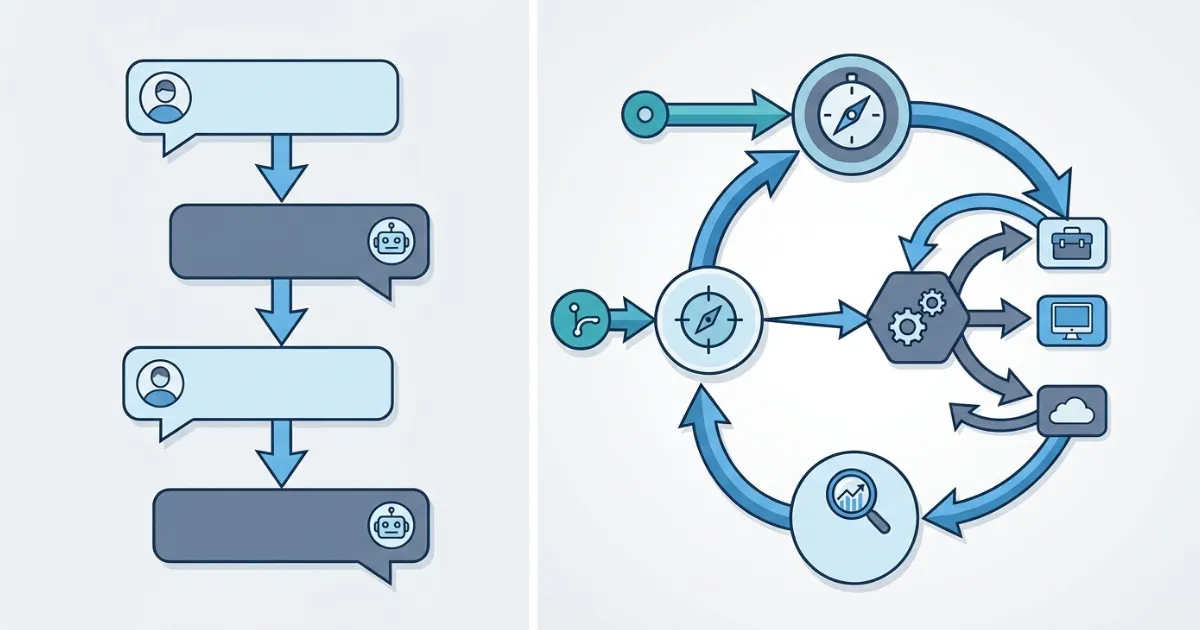
An agent writes to other systems. A chatbot answers questions. That gap, covered in our breakdown of AI agents and chatbots, changes the approval question from “is the output acceptable?” to “what can this thing change?”
Start with permissions. List each system the agent can write to, not only read, and give its credentials an expiry date. The same logic runs through cloud security best practices for machine identities.
Then the log. Keep prompts, tool calls, and outputs long enough to reconstruct any action. The European Commission’s high-risk list includes logging for traceability, so a log kept now saves rework when Annex III duties apply on 2 December 2027 to an agent used in employment or credit decisions.
Finally, stop authority. Write down who can pause the agent at 2 a.m., and test the path. A pause button nobody has pressed is a theory.
For practitioners with two years or more in operations, a 30-day exercise works: pick one agent in production, list its write permissions, confirm its logs can reconstruct its last 50 actions, and run one pause drill. Record how long each step took, because those times become your first agent-specific numbers.
When Standard Advice Backfires
Certifying against ISO/IEC 42001 first can backfire for companies whose AI is mostly vendor-supplied, because ISO describes the standard as a way to manage AI risk across the organization, with application details handled elsewhere.
Audit effort lands on your documents and processes, while the vendor features that carry the risk sit outside your control. If you buy more AI than you build, start with vendor intake questions and contract clauses. Pursue certification when customers or regulators ask for it.
A single review committee in your AI governance framework has the opposite problem. It works for an organization that approves five AI tools a quarter. If requests rise to fifty a quarter, the committee becomes a queue, and queues raise the bypass rate from the previous section. Delegate low-tier approvals to the system owner and reserve the committee for the top tier.
Myths That Waste Governance Budgets
Publishing an AI ethics statement does not satisfy the EU AI Act, whose high-risk obligations from 2 December 2027 include risk assessment, logging, documentation, and human oversight, per the European Commission.
Does ISO/IEC 42001 certification settle your EU obligations? ISO’s own page lists support for legal and regulatory compliance among the benefits, which makes the certificate a source of evidence. The Act’s duties still need checking against each use case.
16 months is how far the AI Omnibus pushed Annex III obligations, from 2 August 2026 to 2 December 2027, and NIST has said AI RMF 1.0 is under revision. An AI governance framework run as a one-off project would already be out of date. Give it an owner and a quarterly review date.
People Also Ask
What is the first step in implementing an AI governance framework?
The first step is an inventory of every AI system in use, including tools bought by individual teams and AI features that vendors added to existing software. Scytale’s 2026 guide puts the AI inventory in step two for the same reason: you can’t assign owners or tiers to systems you haven’t found. Check expense reports, SaaS billing, and single sign-on logs, then record an owner for each entry.
What should an AI governance framework include?
A complete AI governance framework includes accountable owners, written policies, a risk classification process, checkpoints across the AI lifecycle, ongoing monitoring, incident response, and standard documentation. Databricks’s 2026 guide lists the same components. Add a published approval time per tier and a bypass measurement, so you can see whether people follow the process.
How do you build an AI governance framework?
Build an AI governance framework in seven steps: inventory systems, name owners, tier by risk, write controls per tier, publish approval times, monitor after launch, and report quarterly numbers. Use NIST’s four functions, Govern, Map, Measure, and Manage, as the vocabulary for each step, and record every decision in a charter your executive sponsor signs.
What are the four pillars of a good AI governance framework?
No official standard fixes four pillars, so vendors define their own. NIST’s AI RMF 1.0 names four functions instead: Govern, Map, Measure, and Manage. Aurascape’s September 2026 guide uses a different four: discovery and inventory, policy and accountability, runtime enforcement, and audit evidence. Pick one set, define it in your charter, and use it consistently.
Who owns AI governance in a typical organization?
One named executive owns it, typically the CIO, chief data officer, or chief AI officer, who chairs a cross-functional committee of legal, security, data, and business leads, according to Arthur’s 2026 framework guide. Each AI system still needs its own accountable owner, because a committee can set policy but can’t answer for one model’s behavior.
Frequently Asked Questions
How is an AI governance framework different from an AI policy?
An AI policy states what the organization intends, such as prohibited uses or human review requirements. A governance framework adds the machinery that enforces those intentions: named owners, risk tiers, approval gates, monitoring, and incident paths. HiComply’s guide draws the same distinction. In practice, you can write a policy in an afternoon, while a framework takes ongoing work tied to specific systems and people, and it produces records an auditor can read. Write the policy first only if you need an interim rule while you build the rest.
Do you need ISO/IEC 42001 certification?
ISO/IEC 42001 is voluntary, and ISO describes it as applying to organizations of any size that develop, provide, or use AI-based products or services. Certification becomes worth the cost when customers or procurement teams ask for it, or when you already hold ISO/IEC 27001, since DataGuard’s guide says the management-system clauses overlap and make the work faster. Until then, you can adopt the Plan-Do-Check-Act cycle internally and skip the audit.
What should you do when AI regulation dates change?
Update the compliance calendar and leave the risk tiers alone. The AI Omnibus moved Annex III high-risk obligations from 2 August 2026 to 2 December 2027, according to the European Commission, and the controls you wrote for each tier still apply on either date. Assign someone to watch regulatory changes, as Snowflake’s governance guide recommends, and review the calendar each quarter alongside your monitoring results. A framework tied to one date needs rewriting after every delay.
Do small companies need an AI governance framework?
Yes, in a lighter form. A 20-person company can start with a one-page tiering rule, a named owner, and a register of the AI tools in use, then add formal controls as the inventory grows. The AI Omnibus also extended certain simplified requirements, including lighter technical documentation, from small and medium-sized enterprises to small mid-cap companies, per the European Commission, so company size affects documentation duties as well as effort.
What records should you keep for each AI system?
Keep five records per system: the accountable owner, the assigned risk tier, test results, the approval decision with its date, and the date of the last review. For high-risk uses, the European Commission’s list of obligations also covers logging for traceability, technical documentation, and human oversight measures, which apply from 2 December 2027 for Annex III uses. Store the records where an auditor can reconstruct a decision without asking the original builder.


KEEP READING

AI Agents vs. Chatbots: Avoid the Costly Mismatch AI agents vs. chatbots comes down to who chooses the next step. A chatbot returns one reply per input. An AI agent [...]

Small language models (SLMs) are AI text models with roughly 1 million to 10 billion parameters, according to Hugging Face's 2025 overview, small enough to run on a phone, a [...]

AI ethics and bias mitigation mean defining fair outcomes, testing for gaps, and fixing them across the three stages in NIST's 2022 SP 1270. Those stages are pre-design, design and [...]

An AI governance framework is the set of policies, risk tiers, and approval gates that decides which AI systems your organization can ship and which ones need a human sign-off [...]
AI agents and chatbots get sold as the same thing, and that's costing companies money before they've deployed anything. A chatbot matches what you type to a pre-written answer and [...]