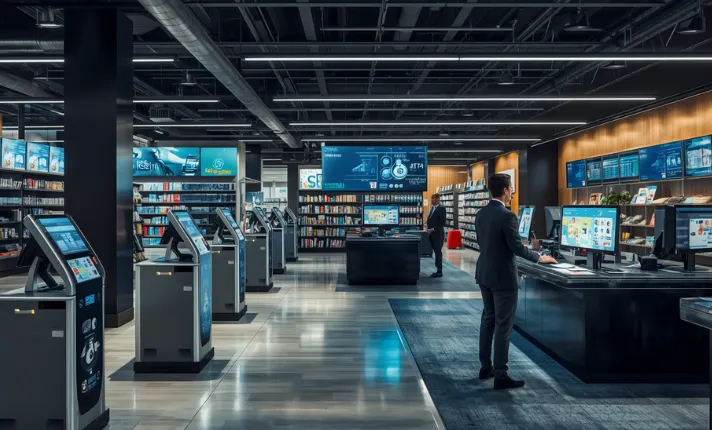
Retail cybersecurity technology challenges affect every part of modern retail operations, from point-of-sale terminals and self-checkout kiosks to e-commerce platforms, warehouse systems, mobile apps, and supplier networks. Retailers store large amounts of payment and customer data, making them frequent targets for ransomware, credential theft, account takeovers, and supply chain attacks. The biggest challenge is not a single threat. It is managing dozens of connected systems, many of which were never designed to work securely together. Retailers that focus only on compliance often discover security gaps after an incident has already disrupted sales, inventory, or customer trust.
Why Retail Has Become a Prime Cyber Target
Retail businesses combine physical stores, e-commerce sites, payment systems, loyalty programs, mobile applications, warehouses, and third-party vendors. Every connection creates another potential entry point for attackers. Retailers also face pressure to keep systems available 24/7, which often delays security upgrades and patching.
Recent attacks on major retailers have shown that operational disruption can be as damaging as stolen data. When checkout systems, inventory platforms, or online stores go offline, revenue losses begin immediately.
The Retail Technology Stack Creates Security Problems
Point-of-Sale Systems Remain High-Value Targets
POS systems process payment information continuously throughout the day. A compromised terminal can expose cardholder data, transaction details, and customer information.
Common POS risks include:
- Memory-scraping malware
- Outdated software
- Weak remote access controls
- Unpatched operating systems
- Poor network segmentation
- Unauthorized USB devices
- Physical tampering
POS attacks continue because many retailers operate hardware that remains in service for years after deployment.
Legacy Systems Create Blind Spots
Many retailers still use older inventory management, warehouse, and accounting systems alongside modern cloud platforms.
This creates several issues:
| Challenge | Impact |
|---|---|
| Unsupported software | Unpatched vulnerabilities |
| Different authentication methods | Weak account security |
| Limited logging | Missed attack indicators |
| Incompatible security tools | Visibility gaps |
| Manual integrations | Human error |
Technology teams often discover that a security tool works perfectly in headquarters but cannot run properly on older store hardware.
Omnichannel Retail Expands the Attack Surface
Customers expect a consistent experience across:
- Physical stores
- Websites
- Mobile apps
- Loyalty programs
- Marketplace integrations
- Buy-online-pickup-in-store services
Every new customer touchpoint creates another system that must be secured and monitored.
Retail Cybersecurity Technology Challenges in Daily Operations
Managing Thousands of Devices
Large retailers may operate:
- POS terminals
- Self-checkout machines
- Handheld scanners
- Digital signs
- Inventory scanners
- Smart shelves
- Security cameras
- IoT sensors
Security teams frequently know less about these devices than they think.
During security assessments, one recurring issue appears: devices installed years earlier remain connected to production networks without active monitoring. Device inventories often lag behind reality.
Store Connectivity Problems
Security policies designed for headquarters often fail in stores.
Examples include:
- Limited bandwidth
- Temporary internet outages
- Unstable VPN connections
- Delayed software updates
- Offline payment processing
Retail environments must continue operating even when connectivity fails. Security controls that depend on constant cloud access may create operational problems.
Balancing Security and Checkout Speed
Customers expect fast transactions.
Retailers therefore face difficult trade-offs:
- Strong authentication vs quick service
- Fraud prevention vs conversion rates
- Security reviews vs rapid deployment
- Access controls vs employee productivity
The wrong balance can increase abandonment rates or reduce store efficiency.
The Ignored Angle: Security Risks Hidden in Store Equipment
Most cybersecurity articles focus on websites and payment systems.
A less discussed issue is the growing number of connected devices inside stores.
Printers and Labeling Systems
Inventory printers often:
- Run outdated firmware
- Share networks with critical systems
- Receive limited monitoring
- Use default credentials
Attackers do not necessarily target printers directly. They use them as entry points into broader store networks.
Self-Checkout Stations
Self-checkout terminals combine:
- Payment processing
- Inventory systems
- Customer interfaces
- Network communications
A vulnerability in one component can affect several business functions simultaneously.
Smart Shelf Technology
Smart retail deployments increasingly rely on:
- RFID readers
- Sensors
- Cameras
- Inventory tracking systems
Research into smart stores consistently identifies device diversity and secure data sharing as major challenges.
The “It Depends” Situation: When Standard Advice Backfires
Multi-Factor Authentication Is Not Always Simple
Security teams often recommend MFA everywhere.
In retail stores, shared devices create complications.
Store managers may use shared terminals during:
- Shift changes
- Inventory checks
- Returns processing
- Price updates
Poor MFA implementation can create delays that staff eventually bypass through unsafe workarounds. The goal is not simply deploying MFA. The goal is deploying it where workflows still function.
Endpoint Protection Can Affect Older Hardware
Modern security agents consume system resources.
Older POS terminals may experience:
- Slower transactions
- Delayed processing
- Application crashes
- Increased support calls
Testing matters more than vendor promises.
Aggressive Patching Can Disrupt Operations
Immediate patching sounds ideal.
Retail reality is different.
A software update deployed before a holiday shopping period can sometimes create larger business risks than waiting for a planned maintenance window.
Risk management depends on timing, business impact, and available rollback procedures.
Insider Knowledge: What Experienced Retail Security Teams Learn
Seasonal Hiring Changes the Threat Landscape
Many retailers double or triple hiring during peak seasons.
New employees often receive:
- Limited onboarding
- Minimal security training
- Temporary credentials
- Access to customer systems
High turnover makes consistent security behavior difficult.
Service Desks Have Become Attack Targets
Several recent retail attacks involved social engineering against help desks.
Attackers convinced support staff to:
- Reset passwords
- Modify MFA settings
- Grant account access
- Change authentication methods
Technical controls fail quickly when identity verification processes are weak.
Vendor Accounts Often Receive Less Scrutiny
Retailers work with:
- Payment processors
- Marketing agencies
- Logistics companies
- HVAC providers
- Software vendors
A vendor account with broad access can become a direct path into critical systems. The historic Target breach remains one of the most cited examples of this risk.
Myth vs Reality
Myth: PCI Compliance Means You Are Secure
Reality: PCI DSS reduces payment-card risk but does not secure every retail system.
Attackers frequently target:
- Employee accounts
- Cloud services
- Vendor portals
- Inventory systems
- Administrative networks
Compliance is only one piece of security.
Myth: Ransomware Only Affects IT Systems
Reality: Retail ransomware incidents can disrupt:
- Store operations
- Distribution centers
- Inventory management
- Online ordering
- Customer support
The operational impact often exceeds the direct technical damage.
Myth: Large Retailers Are the Main Targets
Reality: Smaller retailers often have weaker defenses and fewer security resources.
Attackers regularly target businesses that assume they are too small to attract attention.
Information Gain: The Telemetry Problem Most Articles Ignore
One issue rarely discussed in retail cybersecurity technology challenges is telemetry quality.
Many retailers collect logs from:
- Firewalls
- Servers
- Cloud applications
Yet they often miss logs from:
- Barcode scanners
- Label printers
- Self-checkout stations
- Inventory devices
- Smart shelf systems
This creates visibility gaps.
A security team may believe monitoring is comprehensive while several categories of store equipment generate little or no security data.
The result is delayed detection.
According to retail ransomware reporting, nearly half of retail ransomware incidents originated from previously unknown security gaps. Limited visibility is a major factor.
Advanced Actions for Experienced Teams
Week 1: Build a Real Asset Inventory
Document:
- Every store device
- Operating systems
- Software versions
- Network locations
- Vendor ownership
Do not rely on procurement records alone.
Week 2: Review Third-Party Access
Identify:
- Dormant accounts
- Shared credentials
- Excessive permissions
- Legacy integrations
Week 3: Test Offline Operations
Verify:
- Payment processing
- Store operations
- Inventory functions
- Recovery procedures
Week 4: Simulate an Attack
Run exercises covering:
- Ransomware
- Vendor compromise
- Account takeover
- Help-desk social engineering
Organizations often discover process failures before they discover technology failures.
People Also Ask
What are the biggest retail cybersecurity technology challenges?
The biggest challenges are securing POS systems, managing legacy technology, protecting customer data, controlling third-party access, defending against ransomware, and maintaining visibility across thousands of connected devices. Retailers must secure both physical and digital environments simultaneously.
Why are POS systems difficult to secure?
POS systems frequently remain in service for many years and may run outdated software. They also process payment information continuously, making them attractive targets for malware, skimming, and credential theft attacks.
How do seasonal employees increase cyber risk?
Seasonal workers often receive temporary credentials and shorter training programs. Attackers take advantage of this environment through phishing, credential theft, and social engineering attempts.
FAQ
What causes most retail cybersecurity incidents?
Most incidents stem from a combination of weak credentials, phishing, unpatched systems, vendor access weaknesses, and visibility gaps. Organizations rarely suffer breaches because of a single failure. Multiple weaknesses usually combine to create an opportunity for attackers.
How important is network segmentation for retailers?
Network segmentation remains one of the most effective controls. Separating payment systems, guest Wi-Fi, administrative systems, and store devices limits attacker movement after a compromise. It also reduces the scope of incidents and compliance obligations.
Should retailers move everything to the cloud for better security?
Not automatically. Cloud services can improve security capabilities, but poor identity management, misconfigured storage, and weak access controls can create new risks. Security depends more on implementation than deployment location.
How often should retail security assessments occur?
High-risk retailers typically perform continuous monitoring, quarterly vulnerability reviews, annual penetration testing, and security assessments before major technology rollouts or peak shopping periods.
What is the most overlooked retail cybersecurity threat today?
Many security professionals point to identity-based attacks, especially help-desk social engineering and third-party account compromise. Several recent retail incidents have demonstrated how attackers bypass technical controls by targeting people and processes.


KEEP READING
Latest retail technology innovations 2026 are reshaping how stores operate, how customers shop, and how brands survive in a fast moving market. Retail is no longer just shelves and checkout [...]
Top rated CRM tools for small e‑commerce businesses with email integration empower you to centralize customer data, automate campaigns, and nurture leads, all from one platform. In this comprehensive guide, [...]

In today’s hyper-competitive ecommerce landscape, simply listing products isn’t enough. Shoppers expect experiences tailored to their tastes and behaviors, similar to the “you might also like” suggestions you see on [...]
In an era where 85% of consumers demand proof of ethical sourcing, blockchain supply chains are revolutionizing transparency in product sourcing, and businesses that ignore this shift risk extinction. By 2025, [...]