
Best online courses for machine learning beginners using Python fall into two real categories: courses built for people who already code, and courses built for people who don’t. Most ranking articles blur that line and send total beginners straight into calculus-heavy specializations. This guide separates the two groups, compares five current courses on cost, time, and math prerequisites, and names one number almost every “best courses” list leaves out: how many people who start these programs actually finish them. If you’re choosing your first course this year, that completion number matters as much as the syllabus.
How to Choose a Machine Learning Course When You’ve Never Touched Python
Machine learning courses split into two tracks: ones that teach Python from scratch as part of the curriculum, and ones that assume you already write basic loops and functions before jumping into scikit-learn or TensorFlow. Picking the wrong track is one of the most common reasons beginners stall out in week two.
Check the syllabus before you enroll. If the first module spends real time on Python data types, lists, and functions, it’s built for someone starting from zero. If it opens with NumPy arrays and gradient descent notation, it assumes you already have that base.
Do You Need Calculus and Linear Algebra Before You Start?
No, not to begin. Most beginner-track courses, including the Machine Learning Specialization from DeepLearning.AI and Stanford Online, teach the math alongside the code, one concept at a time, with the heavier proofs marked optional. You’ll see terms like gradient, derivative, and matrix multiplication, but the courses explain each one the moment it shows up rather than assuming you already studied it.
That doesn’t mean math never matters. Once you move past the first course into deep learning or research-level work, linear algebra and probability stop being optional and start being the language everything else is written in.
What “Beginner-Friendly” Actually Means on These Platforms
“Beginner-friendly” on Coursera and edX usually means no machine learning experience required, not no experience of any kind required. Nearly every course in this space still expects you to install Python, run a Jupyter notebook, and read a basic error message without panicking.
If you’ve never opened a terminal, spend a week on plain Python first. Trying to learn variable scope and gradient descent in the same afternoon is how most week-one dropouts happen.
Five Machine Learning Courses for Python Beginners, Compared
The table below compares five current machine learning courses for Python beginners on cost, time commitment, and math prerequisite, using the details listed on each provider’s own course page in 2026.
| Course | Provider | Cost | Time Commitment | Math Prerequisite | Certificate |
|---|---|---|---|---|---|
| Machine Learning Specialization | Stanford Online & DeepLearning.AI (Coursera) | Free to audit; Coursera subscription for certificate | 3 courses, self-paced | High school algebra | Yes |
| Machine Learning with Python | IBM (Coursera) | Free to audit; paid certificate | 1 course, self-paced | Basic Python only | Yes |
| Python for Everybody Specialization | University of Michigan (Coursera) | Free to audit; paid certificate | 5 courses, self-paced | None | Yes |
| Intro to Machine Learning | Kaggle | Free | 1 micro-course, a few hours | None | Completion badge, no certificate |
| Supervised Learning with scikit-learn | DataCamp | Subscription required | 1 course, a few hours | Basic Python | Yes |
Two of these, DeepLearning.AI’s Specialization and IBM’s course, sit at the center of most 2026 recommendation lists, and for different reasons.
The Machine Learning Specialization, detailed on DeepLearning.AI’s course page, rebuilds Andrew Ng’s original 2012 Stanford course into three modules covering supervised learning, neural networks, and unsupervised learning, without requiring prior math or coding experience. IBM’s Machine Learning with Python, listed on Coursera’s course page, goes narrower: one course, built almost entirely around Python and scikit-learn, ending in a rainfall-prediction project you build yourself.
That price difference changes more than your wallet. A free audit gets you every video and every reading. It doesn’t get you the graded labs that force you to write working code instead of watching someone else write it, and writing the code is where the actual learning happens.
The Number These Course Lists Leave Out: Most Learners Don’t Finish
In a 2024 study of 3,495 MOOC registrants published in the journal Open Praxis, only 38.1 percent of participants ultimately earned a certificate. Another 48.5 percent stayed active in the course without ever completing it, and 13.4 percent registered and never opened a single lesson.
That gap barely shows up in “best courses” roundups, which rank content quality and instructor credentials and stop there, even though content quality rarely explains the drop-off. Andrew Ng’s course carries a 4.9 out of 5 rating from millions of learners and still loses most of the people who start it.
Skillademia’s 2026 analysis of course dropout data lists lack of time as the top reason learners quit, cited by 38 percent of respondents, ahead of lost motivation at 25 percent and content difficulty at 14 percent. Half of all dropouts happen in the first two weeks, before the material even gets hard.
That timing tells you something useful: most people don’t quit because machine learning is beyond them. They quit because they picked a course that didn’t fit the hours they actually had free that month.
Free Audit or Paid Certificate: What Changes When You Pay
Coursera and edX let you audit most machine learning courses for free, watching every video and reading every note without paying anything. Auditing quietly removes three things paying learners get: graded assignments, a shareable certificate, and, on most courses, the soft deadlines that keep you moving from week to week.
If you’re testing whether machine learning even interests you, audit first. Watch two weeks of lectures before you commit money you might not get back.
If you already know you want the credential, pay before you start rather than partway through. Coursera co-founder Daphne Koller has described how learners who submit a first graded assignment finish at a far higher rate than those who never submit anything, calling that early commitment “skin in the game.”
Free courses aren’t lower-quality content by default. Kaggle’s Intro to Machine Learning is free with no certificate at all, and its notebooks run entirely in Google Colab. If you work through one lesson a day, you’ll finish the whole micro-course in under a week, since each lesson runs one to two hours with no proctored exam standing between you and the next one.
What You Can Build and Where This Leads After Your First Course
The U.S. Bureau of Labor Statistics counted 245,900 data scientist jobs in 2024 and projects that number will reach 328,300 by 2034, a 34 percent increase driven largely by demand for people who can build and maintain machine learning models.
One beginner course won’t get you hired on its own. It gets you past the point where scikit-learn, pandas, and a training/test split stop looking like foreign words. From there, most learners move in one of three directions: a second, deeper course in the same track, a portfolio project built on a public dataset, or a lateral move inside a current job where they start applying basic models to existing data.
Once you’re comfortable training a basic classifier, the same Python and math foundation carries into newer territory. The scikit-learn models you build in week three of a beginner course use the same core ideas that show up in generative pre-trained transformer models powering today’s AI writing and coding tools, just applied at a very different scale.
Realistic Timelines for Job-Ready Skills
Two to three months of consistent study, four to six hours a week, gets most beginners through one full specialization and a small independent project. Six to twelve months of sustained work, including a portfolio and applied projects, is closer to what employers actually expect to see for an entry-level data or machine learning role.
Common First-Course Mistakes That Have Nothing to Do With the Course Itself
Most first-course failures trace back to logistics, not content. A few patterns show up again and again:
- Enrolling in a five-course specialization during a month already packed at work.
- Skipping the graded labs and only watching the videos, then wondering why nothing sticks.
- Starting with the most math-heavy course because it’s the most famous one, not the one that matches your actual starting point.
- Paying for a subscription before finishing a free audit of week one, then dropping it once the first charge lands.
- Treating the course as the finish line instead of the entry point, and never touching a dataset that isn’t in the course materials.
None of these are about intelligence or aptitude. They’re scheduling and sequencing mistakes, and every one is fixable before you enroll, not after.
If Python itself still feels shaky before you touch machine learning at all, it’s worth backing up first. General guides on the best ways to learn code cover language choice, bootcamps, and practice habits that apply just as much here as they do to any other language.
Machine learning models also don’t stay confined to laptops and Jupyter notebooks. The AI diagnostic systems mechanics now use to flag engine problems before a breakdown run on the same supervised learning concepts covered in a beginner course, just trained on sensor data instead of textbook datasets.
People Also Ask
Do I need to know math to learn machine learning?
No, not to start. Beginner courses like the Machine Learning Specialization teach linear algebra and calculus concepts inside the lessons themselves, explaining each idea the first time it appears. Basic algebra is enough to begin; deeper math becomes necessary later, once you move past foundational courses into research-level work.
How long does it take to learn machine learning as a beginner?
Most learners need two to three months of consistent study, at four to six hours a week, to finish one beginner specialization and build a small project. Reaching a job-ready skill level, with a portfolio and applied experience, typically takes six to twelve months of sustained, regular practice.
Is Python necessary for machine learning?
Yes, for nearly every mainstream course and job. Python’s libraries, including scikit-learn, pandas, and TensorFlow, form the standard toolkit that most machine learning courses, tutorials, and workplaces are built around, which makes it the default starting language for this field.
What is the best free machine learning course for beginners?
Kaggle’s Intro to Machine Learning is fully free with no paid tier, running short notebook-based lessons in Google Colab. For a more complete free option, audit the Machine Learning Specialization on Coursera, which unlocks every video and reading at no cost, minus the graded labs and certificate.
Can I learn machine learning without a computer science degree?
Yes. Most beginner-track courses, including IBM’s Machine Learning with Python, are built for career switchers with no computer science background, teaching programming and machine learning concepts together from the ground up rather than assuming prior formal training in either one.
FAQs
What’s the actual difference between the Machine Learning Specialization and Machine Learning with Python?
The Machine Learning Specialization, from Stanford Online and DeepLearning.AI, is three courses covering supervised learning, neural networks, and unsupervised learning, built to explain the underlying theory alongside the code. IBM’s Machine Learning with Python is a single, narrower course focused almost entirely on writing working Python code with scikit-learn, ending in a hands-on rainfall-prediction project. Pick the Specialization if you want the concepts explained in depth. Pick the IBM course if you want to start writing and running models as fast as possible, with less theory along the way.
How much math do I really need before I start?
Comfortable, basic algebra: working with variables, understanding functions, and reading a simple graph. You don’t need calculus, linear algebra, or statistics coursework going in. Beginner-track courses introduce those topics gradually, usually visually first and then in code, with the formal proofs marked as optional extensions. Even so, if your goal is deep learning, research, or a role that leans heavily on model design rather than applied use, plan to study linear algebra and probability properly after your first course, not before it.
Will a Coursera certificate get me a machine learning job on its own?
Not by itself. A certificate shows you completed structured coursework, which helps at the resume-screening stage, but hiring managers weigh it far less than a working project you can walk them through. Pair any certificate with at least one project built on a real dataset, ideally something you can explain in an interview: what you built, what didn’t work at first, and how you fixed it. The certificate opens the conversation. The project is what actually gets you through it.
Should I learn Python first or learn it inside the machine learning course?
It depends on how comfortable you already are writing basic code. If you’ve never written a function or used a list, spend one to two weeks on plain Python fundamentals first, through a course like Python for Everybody. If you already understand loops, functions, and basic data structures, you can jump straight into a course like Machine Learning with Python, which teaches the machine learning-specific libraries as you go without re-teaching Python syntax from scratch.
What’s a realistic study schedule for a working adult?
Four to six hours a week, split across three or four shorter sessions rather than one long weekend block, tends to produce better completion odds than cramming. Short, frequent sessions match how the graded assignments in most of these courses are structured: one module, one project, one quiz, spaced across a week. Blocking out a recurring time, rather than fitting the course in whenever you find a spare hour, is one of the more reliable predictors of finishing what you start.
Continue using AI Cursor?Keep it onTurn Off


KEEP READING
AI Agents vs. Chatbots: Avoid the Costly Mismatch AI agents vs. chatbots comes down to who chooses the next step. A chatbot returns one reply per input. An AI agent [...]

Small language models (SLMs) are AI text models with roughly 1 million to 10 billion parameters, according to Hugging Face's 2025 overview, small enough to run on a phone, a [...]

AI ethics and bias mitigation mean defining fair outcomes, testing for gaps, and fixing them across the three stages in NIST's 2022 SP 1270. Those stages are pre-design, design and [...]

An AI governance framework is the set of policies, risk tiers, and approval gates that decides which AI systems your organization can ship and which ones need a human sign-off [...]
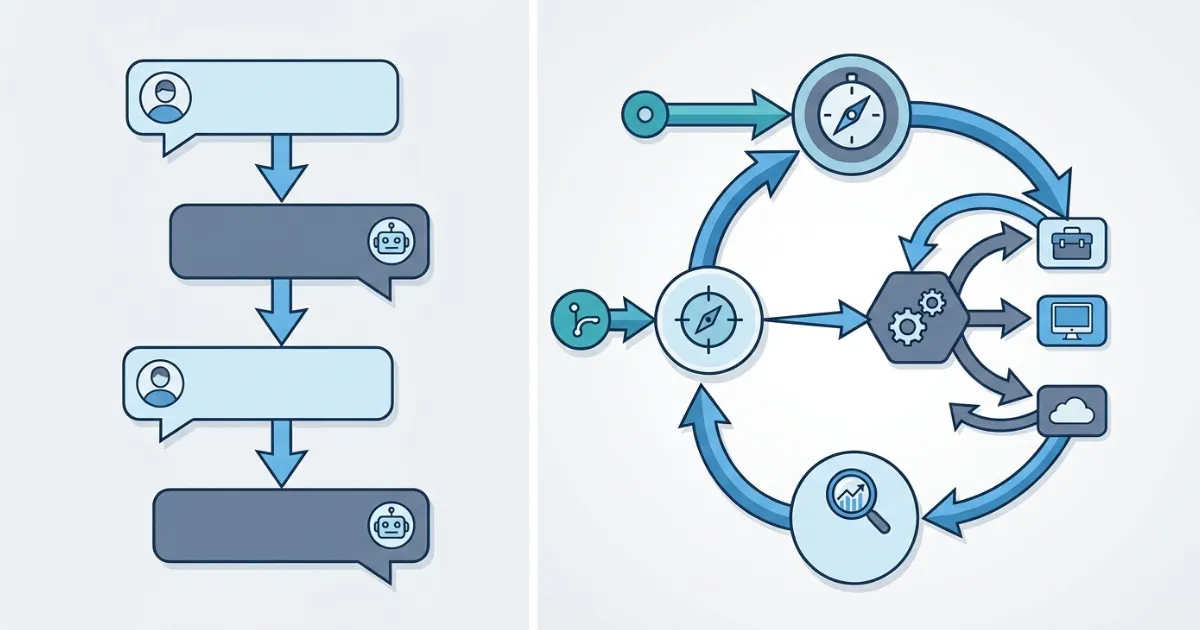
AI agents and chatbots get sold as the same thing, and that's costing companies money before they've deployed anything. A chatbot matches what you type to a pre-written answer and [...]