

AI ethics and bias mitigation mean defining fair outcomes, testing for gaps, and fixing them across the three stages in NIST’s 2022 SP 1270. Those stages are pre-design, design and development, and deployment.
Ethics settles what counts as fair before any code exists. Someone has to pick the groups to compare, the error that matters most, and the gap size that triggers a fix. Write that target down before training. An accuracy score alone can’t tell you who the model fails.
Where Bias Enters an AI System
NIST’s 2022 SP 1270 names three sources of AI bias: statistical and computational, systemic, and human. Statistical bias comes from the data and the code. Buolamwini and Gebru found in 2018 that two popular face benchmarks, IJB-A and Adience, were overwhelmingly lighter-skinned.
Systemic bias is the second source. NIST describes it as institutional and historical patterns, such as unequal access to care, that data records as neutral fact.
Human bias is the third. It enters through choices, such as what counts as success or how a clinician reads a model’s score.
Any AI ethics and bias mitigation plan has to cover all three. Yet NIST’s 2022 report says current fixes focus on computational factors, so systemic and human sources can go untested in your own review.
Two Documented Failures: A Health Algorithm and Face Analysis
Obermeyer and colleagues’ 2019 study in Science found that a widely used health algorithm cut the number of Black patients flagged for extra care by more than half. The algorithm predicted future health care cost instead of illness. Because less money is spent on Black patients at the same level of need, a given risk score hid sicker patients.
The fix was a different training label.
The authors changed the algorithm to stop using cost as a proxy for need, and the bias in predicting who needs extra care went away. That case shows why AI ethics and bias mitigation begin with asking what a label measures.
Buolamwini and Gebru’s 2018 Gender Shades study tested three commercial gender classifiers. Darker-skinned women were misclassified at rates up to 34.7% in 2018, against a 0.8% maximum for lighter-skinned men. If you audit a vision model on one overall accuracy figure, you will miss gaps that size.
Medical imaging tools face the same risk. Non-representative training data can make results less accurate for patients the data barely included.
If your model ranks people by spending, arrests, or clicks, ask what that variable measures before you ask how accurate it is.
Myth: Deleting Race and Gender From the Data Removes Bias
Deleting race and gender columns leaves bias in place when proxies remain, as the cost label did in Obermeyer and colleagues’ 2019 study. A proxy is a variable that tracks a protected attribute without naming it.
NIST’s 2022 systemic category covers this pattern. History gets encoded in features that look neutral. Strong AI ethics and bias mitigation keeps the sensitive attribute in the evaluation data, even when the model never sees it. You need it to compare group error rates afterward.
The Measurement Gap in AI Ethics and Bias Mitigation Audits
Bias audits stall without race or ethnicity labels, which GDPR classes as special-category data. Comparing error rates across groups needs those labels, so teams that never collected them can’t run the test.
34.7% was the top error rate for darker-skinned women in the 2018 Gender Shades study. Buolamwini and Gebru could report it only because they built a benchmark labeled by skin type and gender. Your own product needs a similar benchmark.
If you hold no group labels, you have three options. Collect them with consent for testing only. Build a separate audit sample. Or infer them from other fields and report every result as a range, since inferred labels add error to the audit itself.
A practical AI ethics and bias mitigation program budgets for group labels the same way it budgets for test data. Until you can name the groups in your test set, any fairness claim you make is a guess.
What the 2026 EU Digital Omnibus Changes for Bias Testing
Regulation (EU) 2026/1744 lets providers and deployers of any AI system use sensitive data to test for bias. The EU adopted it on 8 July 2026, and it took effect on 27 July 2026. The rule covers special-category personal data, and use must be strictly necessary.
The rule builds on Article 10(5) of the AI Act, which covered only providers of high-risk systems before 2026. It adds a lawful basis for testing and creates no duty to test. Orrick’s July 2026 analysis lists the safeguards: try synthetic or non-sensitive data first, then use pseudonymization, access controls, limits on onward sharing, and timely deletion.
The same regulation moves the main duties for Annex III high-risk systems, including employment and education uses, from 2 August 2026 to 2 December 2027. That gives teams 16 more months, until December 2027. For teams doing AI ethics and bias mitigation work, the July 2026 change removes a legal barrier.
If your privacy team blocks fairness testing, use that window to build a minimized, access-controlled test pipeline.
An AI Ethics and Bias Mitigation Workflow by Pipeline Stage
IBM’s 2018 AI Fairness 360 toolkit fixes bias at three points: before training, during training, and after training.
Pre-processing changes the data before training. Reweighing gives examples from under-represented groups more weight in training, so errors on those groups cost the model more. Resampling adds or removes examples to balance groups.
In-processing changes the learning step itself. Adversarial debiasing trains a second model to guess the sensitive attribute from the first model’s output. The first model is penalized whenever the guess succeeds.
Post-processing changes decisions after training. Group-specific thresholds change who gets flagged, with no retraining. In some places they can clash with anti-discrimination law, so ask a lawyer first.
Pick the stage you control. If you buy a vendor model, you can’t reach the training data, so post-processing and monitoring are the levers left. Effective AI ethics and bias mitigation pairs the methods you control with monitoring after launch.
A generative pre-trained transformer learns from web-scale text. Editing that corpus is impractical, so teams typically test outputs with paired prompts that differ only in a demographic term. After launch, explainable AI systems that show reasoning paths make it easier to trace an unfair decision to one feature.
When Bias Mitigation Backfires: Conflicting Fairness Metrics
The January 2025 International AI Safety Report warns that bias fixes can create new biases. The report also says full fairness may not be technically possible.
Chouldechova showed in 2017 that score calibration and error-rate balance can’t both hold when recidivism prevalence differs across groups. Kleinberg, Mullainathan and Raghavan reached a related result in 2016. Any classifier facing groups with different base rates meets the same arithmetic.
So in AI ethics and bias mitigation, the fix you pick is a policy choice. A team that equalizes error rates gives up score calibration, while a team that keeps calibrated scores accepts unequal error rates. Choose the metric that protects people from the costliest error, which for a disease screen is usually the missed case.
So which gap do you close first when two fair definitions can’t both hold, and who signs off on that choice?
People Also Ask
What are the basic ethical issues with biases in AI systems?
Biased AI systems raise ethical issues of discrimination, unfairness, and stigma, according to a 2025 review in Frontiers in Digital Health. Those harms hit hardest in hiring, credit, and healthcare. A model’s score can change access to a job, a loan, or care. Fixing them starts with measuring outcomes by group.
How can biases in AI systems be identified, measured, and mitigated?
AI teams find bias by comparing error rates across groups. They measure it with fairness metrics and fix it before training, during training, or after. NIST’s 2022 SP 1270 ties these actions to its pre-design, design and development, and deployment stages. Re-run the comparison after every retrain, because new data can bring gaps back even in a model that passed testing.
How can AI engineers avoid perpetuating biases in their ML models?
AI engineers avoid perpetuating bias by setting a fairness target first, testing each group’s accuracy, and retesting after every update. Buolamwini and Gebru’s 2018 audit shows why: overall accuracy hid a 34.7% error rate for darker-skinned women. Keep group labels in your evaluation set even if the model never sees them.
What is bias mitigation in AI?
Bias mitigation in AI is the set of methods that shrink performance gaps between groups. They work on training data, the learning algorithm, or model outputs. IBM’s 2018 AI Fairness 360 toolkit implements methods at all three points. Because each method targets a different definition of fair, define your metric first, and write down why you picked it.
Why does AI bias matter in hiring, lending, and healthcare?
AI bias matters in hiring, lending, and healthcare because model scores decide access to jobs, credit, and care. The 2019 Obermeyer study in Science found a cost-based health score cut the number of Black patients flagged for extra care by more than half. The EU now treats employment and education systems as high-risk, with Annex III duties due 2 December 2027.
Frequently Asked Questions
What is the difference between AI ethics and bias mitigation?
AI ethics sets the principles: what counts as fair, who is accountable, and which harms are unacceptable. Bias mitigation is the engineering work that measures and reduces gaps. Together, AI ethics and bias mitigation give a team both a target and a method. Without an ethics decision, mitigation has no target. Without mitigation, an ethics policy stays a document. NIST’s 2022 SP 1270 links them in its pre-design stage, where teams define the problem and the groups affected.
Can you fully remove bias from an AI model?
AI ethics and bias mitigation reduce bias but can’t remove it. The January 2025 International AI Safety Report says full fairness may not be technically possible. Chouldechova’s 2017 proof shows some fairness criteria conflict when group base rates differ. The practical goal is a documented choice: pick the metric that matches the harm you most want to avoid, set an acceptable gap, and monitor it after launch. Revisit that choice when the data, the users, or the law changes.
Which fairness metric should you choose?
In AI ethics and bias mitigation, choose the metric that matches the costliest error in your use case. For a disease screening tool, a missed case usually costs more than a false alarm, so equal false negative rates matter most. For a loan model, calibrated scores may matter more because lenders price risk. Chouldechova’s 2017 result means you can’t meet every metric at once when base rates differ. Write down which one you chose and why. Reviewers and regulators will ask.
Do small teams need to worry about the EU AI Act’s bias rules?
Small teams still need to check their exposure. The EU AI Act sorts risk mainly by use case, and the 2026 Digital Omnibus gives only limited relief to small mid-cap companies. Regulation (EU) 2026/1744 delays Annex III high-risk duties for tools such as employment and education systems until 2 December 2027. If you serve EU users, map each model to Annex III before mid-2027 and document your bias tests.
How often should you re-audit a deployed AI model?
AI ethics and bias mitigation continue after launch, so re-audit a deployed model after every retrain, every major data source change, and every shift in its users. NIST’s 2022 SP 1270 treats deployment as its own stage because bias can appear when a model meets real users, even after it passes testing. Set a calendar check too, since silent drift is easy to miss. Log group-level error rates on a dashboard so a drop for one group triggers review before a complaint does.


KEEP READING

How to build an AI governance framework comes down to four written decisions for every AI system: who owns it, which risk tier it sits in, what approval it needs, [...]

AI Agents vs. Chatbots: Avoid the Costly Mismatch AI agents vs. chatbots comes down to who chooses the next step. A chatbot returns one reply per input. An AI agent [...]

Small language models (SLMs) are AI text models with roughly 1 million to 10 billion parameters, according to Hugging Face's 2025 overview, small enough to run on a phone, a [...]

An AI governance framework is the set of policies, risk tiers, and approval gates that decides which AI systems your organization can ship and which ones need a human sign-off [...]
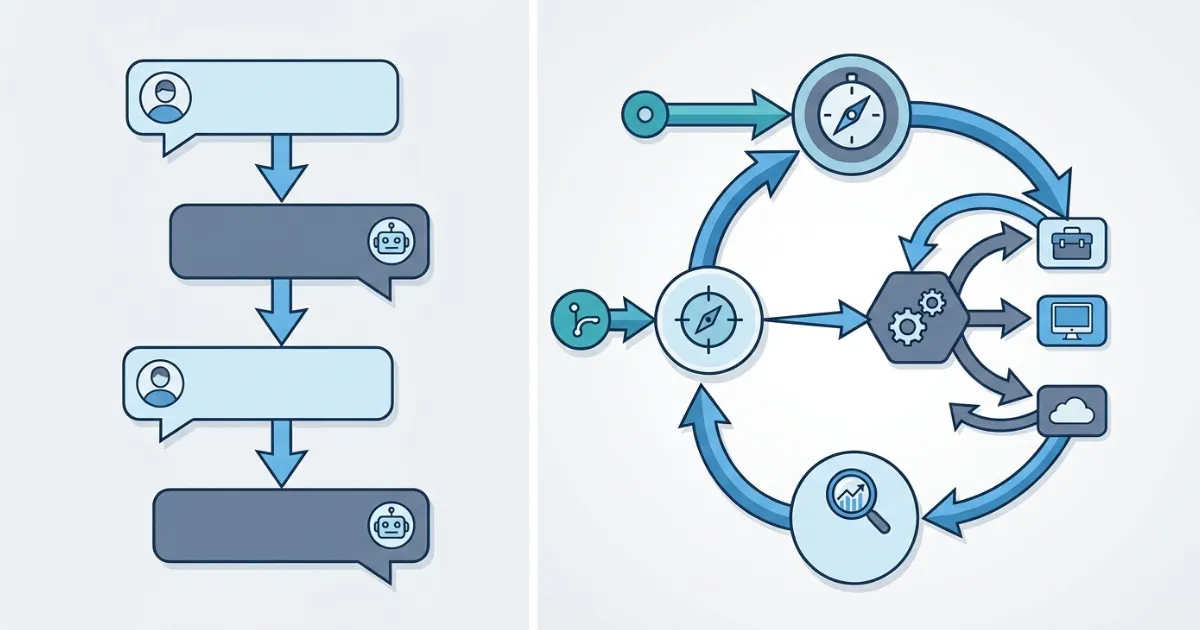
AI agents and chatbots get sold as the same thing, and that's costing companies money before they've deployed anything. A chatbot matches what you type to a pre-written answer and [...]