mRNA vaccine technology works by handing your own cells a temporary instruction sheet, not a piece of the virus itself. Once inside a muscle cell, that instruction sheet directs ribosomes to build a single viral protein. Your immune system tags that protein as foreign and starts producing antibodies before any real infection occurs. The mRNA itself lasts only a few days before enzymes break it down completely. This article covers the actual mechanism: how the molecule gets past the cell membrane, what happens inside the cytoplasm, why the vaccine is engineered to fall apart on a schedule, and where the platform is headed next.
What mRNA Vaccine Technology Actually Delivers
mRNA vaccine technology delivers a synthetic strand of messenger RNA coding for one viral protein, never the virus itself, a distinction the CDC’s 2026 clinical guidance repeats explicitly for a reason: it’s the detail most people skip past.
Messenger RNA vs. Your DNA
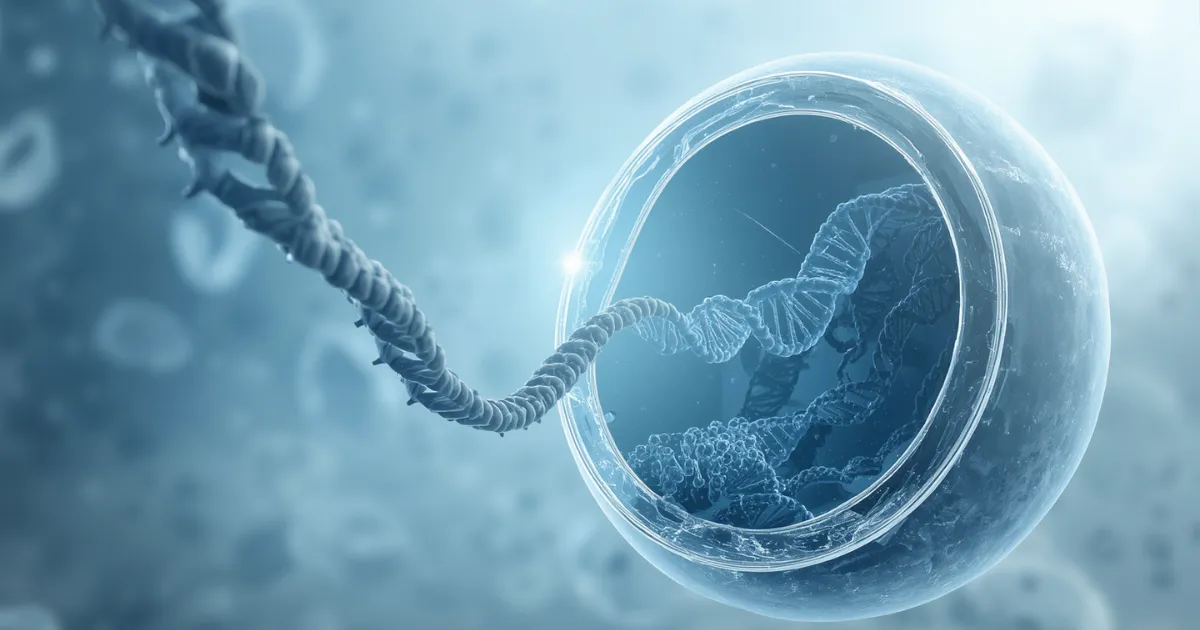
DNA sits inside the nucleus and never leaves. mRNA is a short-lived copy of a single gene, made in the nucleus, then shipped to the cytoplasm where ribosomes read it. Vaccine mRNA never enters the nucleus at all. It lacks the reverse transcriptase enzyme needed to convert itself back into DNA, so it structurally cannot fold into your genome. Genome.gov, the NIH’s public genomics resource, confirms the mRNA in current vaccines degrades within days and does not alter a person’s genetic material.
The Spike Protein Blueprint
The mRNA in Comirnaty and Spikevax codes for a stabilized version of the SARS-CoV-2 spike protein, locked into shape with two proline substitutions. That shape matters. It’s the pre-fusion form your immune system needs to see in order to build antibodies that actually block infection, rather than antibodies against a floppy, already-collapsed fragment.
How mRNA Vaccine Technology Works, Step by Step
mRNA vaccine technology works through five linked steps: lipid encapsulation, cell entry, ribosomal translation, surface display, and antibody production, a sequence the FDA documented in detail during Comirnaty’s original approval in August 2021.
Getting Past the Cell Membrane: Lipid Nanoparticles
Naked mRNA breaks down in seconds outside a cell and can’t cross a fatty membrane on its own. Lipid nanoparticles solve both problems at once. Four lipid types, an ionizable lipid, cholesterol, a helper phospholipid, and a PEGylated lipid, wrap around the mRNA into a particle roughly 80 nanometers wide. The ionizable lipid stays neutral at blood pH so it doesn’t damage the cell going in, then picks up a positive charge inside the more acidic endosome. That charge shift bursts the particle open and releases the mRNA into the cytoplasm.
Translation Inside the Cytoplasm
Ribosomes read the mRNA in three-letter codons and assemble the spike protein from free amino acids, using the same machinery your cells already run constantly. A modified nucleoside, N1-methylpseudouridine, keeps the cell’s innate immune sensors from flagging the mRNA as foreign and destroying it before translation finishes. Genome.gov credits this substitution as the discovery that made mRNA vaccines practical. Unmodified mRNA triggered such a strong interferon response in 1990s lab trials that cells simply stopped translating it.
Triggering the Immune Response
Spike protein fragments get displayed on the cell surface. Dendritic cells pick up the signal, travel to nearby lymph nodes, and activate B cells and T cells. B cells differentiate into plasma cells that produce neutralizing antibodies. Reaching a protective antibody level typically takes 10 to 14 days after a first dose, per CDC’s 2026 vaccination overview.
That two-week gap is why getting a shot the day before a flight or a family visit doesn’t buy you same-day protection.
Why mRNA Vaccines Are Built to Fall Apart
mRNA vaccine technology intentionally uses a short-lived molecule instead of a durable one. A vaccine that kept producing spike protein indefinitely would mean a longer window of side effects for no added benefit.
Half-Life and Why It Matters
Vaccine mRNA typically degrades within 48 to 72 hours inside a cell, broken down by the same RNase enzymes that clear your body’s own messenger RNA every day. Reactogenicity, the injection-site soreness and fatigue reported in Pfizer’s original trial data, tracks with total antigen exposure. A molecule engineered to disappear quickly limits that exposure window on purpose.
That’s also why boosters exist. Once the mRNA is gone and antibody levels taper, as they naturally do within months, there’s nothing left teaching your immune system anything new until the next dose arrives.
What Most People Still Get Wrong About mRNA Vaccines
Myth: The mRNA Can Turn Into DNA
This claim has circulated since 2020, built on real biology applied to the wrong context. Retroviruses like HIV carry reverse transcriptase, an enzyme that copies RNA into DNA. Vaccine mRNA carries no such enzyme, and human cells don’t normally express one either. MedlinePlus, the NIH’s consumer genetics site, states directly that mRNA vaccines cannot alter a person’s DNA.
Myth: mRNA Vaccine Technology Is Unproven
This one surfaces less often now than in 2021, but it still shows up in comment sections. Genome.gov traces mRNA vaccine research to 1990s animal studies, and the platform was tested in trials for cytomegalovirus, Zika, and multiple influenza strains years before COVID-19 existed. The first product launch was fast. The underlying science wasn’t new.
Self-Amplifying mRNA: The Shift Most Explainers Skip
Self-amplifying mRNA, the technology behind Moderna’s mNexspike, carries its own replication machinery, so a single dose produces far more antigen from a fraction of the mRNA used in first-generation vaccines.
mNexspike received FDA approval for the 2025-2026 season at a substantially lower microgram dose than Spikevax, because its encoded replicase enzyme lets the mRNA copy itself inside the cell after delivery, according to the FDA’s May 2025 regulatory review. A lower dose generally means less total lipid nanoparticle exposure and fewer side effects, though full-season reactogenicity comparisons are still being collected. If the manufacturing economics hold, self-amplifying platforms could make annual reformulation, and eventually entirely new vaccine targets, cheaper to produce than first-generation mRNA ever was. This mirrors a broader wave of biotechnology innovation moving through drug development right now, not just vaccines.
Where mRNA Vaccine Technology Is Headed: Cancer and Beyond
Beyond infectious disease, mRNA vaccine technology is being adapted into personalized cancer vaccines encoding a patient’s own tumor mutations. Moderna and Merck’s mRNA-4157 combination therapy is currently in Phase 3 trials for melanoma.
The approach flips the infectious-disease model. Instead of coding for a viral protein everyone shares, a tumor sample gets sequenced, its specific mutations get identified, and a vaccine gets built to match that one patient’s cancer. The UK Health Security Agency reported in 2024 that the UK government partnered with BioNTech to run early personalized cancer vaccine trials domestically. None of these therapies are approved yet. Manufacturing a single-patient vaccine on a clinically useful timeline, typically under six weeks from biopsy to injection, remains the field’s main bottleneck. Modern point-of-care testing technology is helping close part of that gap by speeding up the diagnostics that feed into treatment decisions.
People Also Ask
Does the mRNA vaccine change your DNA?
No. The mRNA never enters the cell nucleus, where DNA is stored, and it lacks the enzyme needed to convert itself into DNA. It degrades within days of injection. This is confirmed by both the NIH’s MedlinePlus resource and CDC guidance.
How long does mRNA vaccine protection last?
Protective antibody levels typically build over 10 to 14 days after a dose, then gradually taper over several months. That’s why updated boosters targeting current variants, like the 2025-2026 LP.8.1 formulation, get released roughly annually.
Is mRNA vaccine technology new?
The delivery format felt new in 2020, but the science dates to 1990s research. mRNA platforms were tested against cytomegalovirus, Zika, and influenza in human trials years before any COVID-19 vaccine existed.
Why do mRNA vaccines need cold storage?
mRNA is a naturally fragile molecule that breaks down at room temperature within hours. Ultra-cold storage, historically around -70°C for early Pfizer formulations, slows that degradation so the vaccine stays effective until it’s administered.
Can mRNA vaccines be used for diseases besides COVID-19?
Yes. Researchers are testing mRNA platforms for flu, RSV, and personalized cancer vaccines. Moderna and Merck’s mRNA-4157 is currently in Phase 3 melanoma trials, and BioNTech is running UK-based cancer vaccine trials as of 2024.
FAQs
What is mRNA vaccine technology in simple terms?
It’s a method of vaccination that gives your cells temporary genetic instructions to build one small piece of a virus, rather than injecting a weakened or inactivated version of the virus itself. Your ribosomes read those instructions and produce a viral protein, your immune system recognizes it as foreign and builds antibodies against it, and the mRNA instructions break down within days. If you’re later exposed to the real virus, your immune system already knows how to respond. The tradeoff is that mRNA vaccines need cold storage and, so far, work best against specific, well-characterized protein targets.
Is mRNA vaccine technology safe long term?
Regulators have tracked hundreds of millions of doses since 2021 through systems like VAERS and v-safe. The known risks, primarily myocarditis and pericarditis in younger males within the first week after vaccination, are documented directly in FDA prescribing information and are rare and typically mild. Because the mRNA and lipid nanoparticles clear the body within days to weeks, there isn’t a plausible mechanism for delayed effects the way there might be with a persistent biologic. Long-term surveillance continues, and the FDA updates safety labeling as new data comes in, most recently for the 2025-2026 formulations.
How is mRNA vaccine technology different from traditional vaccines?
Traditional vaccines typically inject a weakened, inactivated, or partial version of the actual pathogen, grown and purified through cell or egg culture, a process that can take months. mRNA vaccines skip pathogen culture entirely. Once researchers have a viral genetic sequence, they can design the corresponding mRNA and move to manufacturing in weeks rather than months, which is why updated COVID-19 formulations can target new variants on a near-annual cycle. The manufacturing process itself is also more uniform across different targets, since it’s the same lipid nanoparticle and synthesis chemistry regardless of which protein the mRNA codes for.
Can mRNA vaccine technology be used for diseases besides COVID-19?
Yes, and this is where the platform is expanding fastest. Beyond COVID-19, mRNA is in active trials for seasonal flu, RSV, and personalized cancer vaccines that target a patient’s specific tumor mutations. Moderna and Merck’s mRNA-4157 melanoma vaccine is in Phase 3 trials, and BioNTech has partnered with the UK government on early-stage cancer vaccine research. None of the cancer applications are FDA-approved yet, and manufacturing timelines for personalized vaccines, built for one patient at a time, remain a significant hurdle before wider rollout.
Why do mRNA vaccines need to be stored so cold?
mRNA is chemically unstable at room temperature and degrades within hours if left unrefrigerated, which would make an injected dose useless. Early Pfizer formulations required storage around -70°C, though reformulations since 2021 have raised that threshold closer to standard freezer or refrigerator temperatures for parts of the shelf life. The same instability that requires cold-chain logistics is also, deliberately, what makes the vaccine safe once it’s inside your body: it’s built to break down quickly rather than persist.


KEEP READING
3D Bioprinting: Organ transplants and tissue engineering are rapidly transforming modern medicine by offering a groundbreaking solution to one of healthcare’s biggest challenges, organ shortages. Imagine a future where doctors [...]

VR and AR applications in medical training and therapy are transforming how doctors learn, patients heal, and healthcare systems operate. These immersive technologies simulate real-life scenarios where medical students can [...]
Medical imaging technology advances in diagnostics are transforming healthcare in 2025, delivering faster, more accurate, and patient-friendly solutions than ever before. From AI-powered image analysis to photon-counting CT and real-time [...]
As artificial intelligence (AI) reshapes modern healthcare—driving diagnostics, treatment planning, and operational efficiency—the privacy of patient data has never been more critical. This article dives into the ethical considerations of [...]
Biotechnology innovation stands at the forefront of a new industrial revolution, merging biology with engineering, data science, and automation. From CRISPR-based gene therapies to AI-accelerated drug discovery, the future of [...]