3D Bioprinting: Organ transplants and tissue engineering are rapidly transforming modern medicine by offering a groundbreaking solution to one of healthcare’s biggest challenges, organ shortages. Imagine a future where doctors can print a fully functional organ using your own cells, eliminating long waiting lists and reducing transplant rejection. This article dives deep into how 3D bioprinting works, its applications in tissue engineering, current breakthroughs, limitations, and what lies ahead. Whether you’re a student, researcher, or curious reader, you’ll gain clear, practical insights into this revolutionary technology.
What Is 3D Bioprinting?
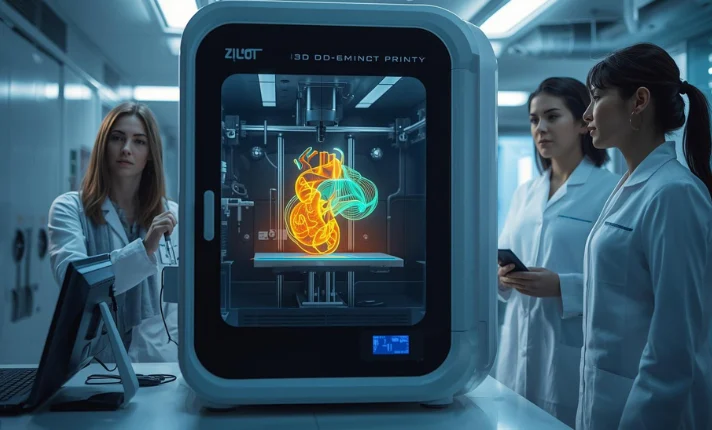
3D bioprinting is an advanced form of manufacturing that uses living cells and biomaterials to create tissue-like structures. Unlike traditional 3D printing (which uses plastic or metal), bioprinting builds biological systems layer by layer.
How It Differs from Traditional 3D Printing
- Uses bio-ink (living cells + biomaterials) instead of plastics
- Requires controlled environments to keep cells alive
- Focuses on biological functionality, not just structure
Key Components
- Bio-ink: Mixture of living cells and supportive material
- Scaffolds: Structures that support tissue formation
- Cells: Stem cells or specialized human cells
Why 3D Bioprinting Matters in Organ Transplants
The Organ Shortage Crisis
Millions of patients worldwide wait for organ transplants, but donor organs are limited. According to the World Health Organization, supply meets only a fraction of global demand.
Limitations of Traditional Transplants
- Risk of immune rejection
- Long waiting times
- Dependence on donors
How Bioprinting Solves These Issues
3D bioprinting enables patient-specific organs, reducing rejection risk and eliminating donor dependency.
How 3D Bioprinting Works (Step-by-Step)
1. Medical Imaging
Doctors use CT or MRI scans to create a digital model of the organ.
2. Bio-ink Preparation
Cells are extracted from the patient and mixed with biomaterials.
3. Printing Process
The printer deposits layers of bio-ink to form tissue structures.
4. Tissue Maturation
Printed tissue is placed in a bioreactor to grow and stabilize.
Types of 3D Bioprinting Technologies
Inkjet Bioprinting
- Fast and cost-effective
- Suitable for simple tissues
Extrusion-Based Bioprinting
- Most commonly used
- Handles thicker materials
Laser-Assisted Bioprinting
- High precision
- Expensive but accurate
Applications in Tissue Engineering
Skin for Burn Victims
Bioprinted skin is already used in research for treating burns.
Bone and Cartilage
Custom implants for orthopedic treatments.
Cardiac Tissue
Used to study heart diseases and drug responses.
Liver and Kidney Models
Helps in drug testing and toxicity studies.
3D Bioprinting for Organ Transplants
Current Progress
Scientists have successfully printed:
- Mini liver tissues
- Skin grafts
- Cartilage structures
Organizations like Organovo are leading innovations in this field.
Challenges in Complex Organs
Printing organs like the heart or kidney is difficult due to:
- Complex structures
- Need for blood vessels
- Functional integration
Technical Challenges in 3D Bioprinting
Vascularization
Creating tiny blood vessels is essential for survival of tissues.
Cell Viability
Cells must remain alive during and after printing.
Material Limitations
Bio-inks must balance strength and compatibility.
Scalability
Producing full-sized organs remains a challenge.
Ethical and Regulatory Considerations
Ethical Concerns
- Manipulation of living cells
- Accessibility inequality
Regulation
Authorities like the U.S. Food and Drug Administration oversee safety and approval.
Cost and Accessibility
Current Costs
Bioprinting technology is expensive due to advanced equipment and research.
Future Outlook
Costs are expected to decrease as technology advances.
Advantages of 3D Bioprinting
- Personalized organs
- Reduced rejection risk
- Faster availability
- No donor dependency
Limitations and Risks
- Still experimental
- High cost
- Ethical concerns
- Limited long-term success data
Future of 3D Bioprinting by 2030
What to Expect
- Functional organ printing
- AI integration
- Wider hospital adoption
Research institutions like Harvard Medical School are actively advancing this field.
Careers in 3D Bioprinting
Top Fields
- Biomedical Engineering
- Regenerative Medicine
- Biotechnology
Skills Needed
- Biology + engineering knowledge
- Lab research experience
- Programming (for modeling)
People Also Ask
Can 3D bioprinting create fully functional organs?
Not yet fully functional for transplantation, but progress is ongoing.
How long does it take to print an organ?
It can take hours to days, depending on complexity.
Is 3D bioprinting safe?
Still under clinical research and testing.
FAQs
What is bio-ink made of?
Bio-ink contains living cells mixed with biomaterials like hydrogels.
Are bioprinted organs used in hospitals?
Mostly in research, not widely for transplantation yet.
What is the biggest challenge?
Creating functional blood vessels (vascularization).
How accurate is bioprinting?
Highly precise, depending on technology used.
Can it eliminate organ waiting lists?
Potentially yes, but not in the immediate future.
Conclusion: The Future Is Being Printed
3D Bioprinting: Organ transplants and tissue engineering represent a revolutionary step toward personalized medicine. While challenges like vascularization and cost remain, the progress is undeniable. As technology evolves, the dream of printing fully functional organs could soon become reality—transforming healthcare and saving millions of lives worldwide.


KEEP READING
mRNA vaccine technology works by handing your own cells a temporary instruction sheet, not a piece of the virus itself. Once inside a muscle cell, that instruction sheet directs ribosomes [...]
VR and AR applications in medical training and therapy are transforming how doctors learn, patients heal, and healthcare systems operate. These immersive technologies simulate real-life scenarios where medical students can [...]
Medical imaging technology advances in diagnostics are transforming healthcare in 2025, delivering faster, more accurate, and patient-friendly solutions than ever before. From AI-powered image analysis to photon-counting CT and real-time [...]
As artificial intelligence (AI) reshapes modern healthcare—driving diagnostics, treatment planning, and operational efficiency—the privacy of patient data has never been more critical. This article dives into the ethical considerations of [...]
Biotechnology innovation stands at the forefront of a new industrial revolution, merging biology with engineering, data science, and automation. From CRISPR-based gene therapies to AI-accelerated drug discovery, the future of [...]