
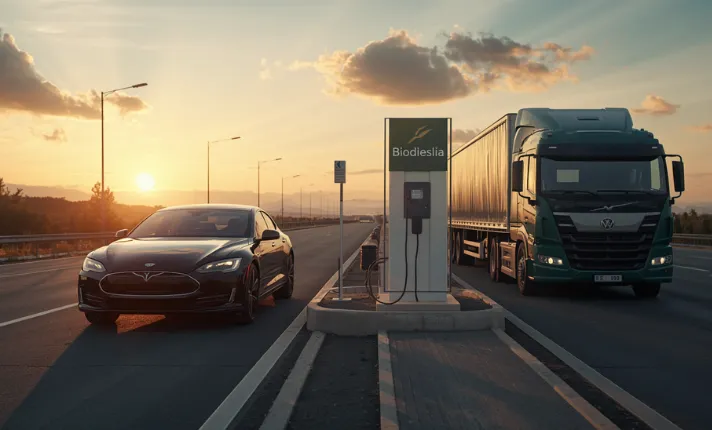
Alternative fuels for vehicles pros and cons of biodiesel vs electric is no longer a niche debate. Diesel fleets are under pressure to cut emissions. EV adoption keeps growing. Fuel prices swing fast. Governments push cleaner transport, but the right answer still depends on where you drive, what you haul, and how long vehicles stay on the road. Biodiesel gives diesel engines a lower-emission fuel without replacing the vehicle. Electric vehicles cut tailpipe emissions and reduce maintenance, but charging access and battery cost still matter. This guide compares both using real operating costs, cold-weather behavior, maintenance realities, infrastructure limits, and long-term ownership trade-offs.
What biodiesel and electric vehicles actually are
Biodiesel basics
Biodiesel is a renewable fuel made from vegetable oils, animal fats, or recycled cooking grease. Most vehicles do not use pure biodiesel. They use blends:
- B5 = 5% biodiesel
- B20 = 20% biodiesel
- B100 = pure biodiesel
B20 is the most common commercial blend in North America because many diesel engines support it without major modifications. The fuel works in compression-ignition diesel engines. That matters for heavy trucks, buses, farm equipment, and backup generators where diesel still dominates.
Electric vehicle basics
Electric vehicles use battery packs and electric motors instead of internal combustion engines. The battery stores electricity and powers the drivetrain directly.
There are three main categories:
| Type | Description |
|---|---|
| BEV | Fully electric vehicle with no gasoline engine |
| PHEV | Plug-in hybrid with battery and engine |
| HEV | Hybrid without plug-in charging |
This article focuses mainly on fully electric vehicles because they directly compete with fuel-based alternatives.
Where each fuel fits today
Biodiesel fits industries that already rely on diesel infrastructure. Electric vehicles fit urban commuting, delivery routes, and predictable driving patterns.
That difference shapes nearly every trade-off.
The ignored angle most articles skip
Most comparison articles stop at emissions and fuel cost. Real ownership problems usually appear somewhere else.
Cold-weather performance
Biodiesel thickens faster than petroleum diesel in low temperatures. Higher blends like B50 or B100 can gel during winter if storage systems are not heated. Electric vehicles lose range in cold weather because battery chemistry slows down and cabin heating draws extra energy. Testing from AAA found some EVs lost over 40% range in freezing temperatures with cabin heat running heavily.
The practical result:
- Biodiesel can create startup issues in severe cold
- EVs can complete the trip but with shorter usable range
Drivers in northern climates notice this quickly.
Short-trip vs long-trip use
Electric vehicles perform best in predictable short-to-medium driving cycles where charging is easy. Biodiesel works better in irregular long-haul operations where downtime matters more than fuel efficiency. A delivery van returning to a depot every night is an EV-friendly case. A rural contractor driving 500 km unexpectedly across remote routes usually prefers diesel-based systems.
Fuel storage and battery storage
Biodiesel absorbs moisture faster than petroleum diesel. Long storage periods can cause microbial growth and fuel degradation. Electric vehicles avoid liquid fuel storage entirely, but batteries slowly degrade over time. Heat accelerates degradation. Battery management systems reduce this problem, though degradation still exists after years of charging cycles.
Warranty and approval limits
This gets ignored constantly. Many diesel manufacturers approve B5 or B20 but not higher blends. Using unsupported biodiesel concentrations can affect warranty coverage. Electric vehicles also carry battery warranty limits based on years and mileage. Most major EV brands now offer battery warranties around 8 years or 100,000 miles. Read the approval sheet before switching fuel types. A surprising number of fleet operators skip this step.
When standard advice backfires
Why biodiesel can fail as a blanket choice
Biodiesel sounds easy because it works with existing diesel systems. That assumption breaks down in older fleets.
Older engines can experience:
- Fuel filter clogging
- Seal degradation
- Tank contamination loosening
- Cold-weather startup issues
The first few months after switching often create more maintenance calls because biodiesel cleans old deposits inside the fuel system. Fleet managers already know this pattern. Most general blogs never mention it.
Why electric can fail for some drivers
EV ownership becomes frustrating when charging access is weak. Home charging changes the entire ownership experience. Without it, drivers depend on public charging networks, which still vary heavily by region. Apartment residents face the biggest inconvenience gap.
Apartment living and no home charger
This is one of the biggest EV adoption barriers globally. Public fast charging costs more than home charging. Waiting time also adds friction to ownership. A homeowner charging overnight experiences a completely different EV experience than someone hunting for public chargers twice a week. That difference rarely appears clearly in broad EV comparisons.
Rural routes and irregular charging access
Electric range estimates assume controlled driving conditions. Highway speed, towing, steep terrain, strong heat, and winter weather reduce range faster than many buyers expect. Diesel fueling still wins for irregular long-distance operations where route flexibility matters more than efficiency.
Biodiesel pros for vehicle owners
Works in many diesel vehicles
Biodiesel blends can operate in existing diesel engines with little or no modification. That reduces replacement cost dramatically. A fleet does not need to replace 50 trucks immediately to reduce petroleum use.
Can use waste oils and fats
One practical advantage of biodiesel is feedstock flexibility.
Sources include:
- Soybean oil
- Used restaurant grease
- Animal fats
- Canola oil
- Algae research feedstocks
Waste-oil biodiesel can lower lifecycle emissions significantly compared to fossil diesel.
Easier transition for diesel fleets
This matters more than consumer blogs admit. Heavy-duty transport still relies heavily on diesel infrastructure:
- Repair shops
- Fuel depots
- Maintenance technicians
- Parts supply chains
Biodiesel fits into existing systems faster than full electrification.
Useful in places with weak charging access
Charging infrastructure remains uneven outside large urban areas. Biodiesel avoids that problem because diesel fueling already exists nearly everywhere commercial vehicles operate.
Biodiesel cons that matter in real use
Blend limits and engine approval
Not every engine supports every biodiesel blend. Some manufacturers approve only B5. Others allow B20. Higher blends may require hardware adjustments. Always verify OEM guidance before switching fuel programs.
Cold-flow problems
Biodiesel thickens faster in winter conditions. Operators in colder regions often reduce biodiesel blend percentages seasonally. This operational detail rarely appears in simplified “green fuel” discussions.
Storage stability
Pure biodiesel oxidizes faster than petroleum diesel during long storage. Fuel turnover matters. Backup systems storing fuel for months require closer monitoring.
Feedstock and price swings
Biodiesel pricing depends heavily on agricultural markets and feedstock supply. Soybean prices, crop shortages, and policy incentives all affect cost stability. That creates more volatility than many drivers expect.
Maintenance issues from fuel quality
Poor-quality biodiesel creates serious engine problems. Contaminated fuel can cause:
- Injector damage
- Water contamination
- Sediment buildup
- Filter blockage
Fuel quality standards matter heavily here. ASTM D6751 compliance in the United States is important for reliability.
Electric vehicle pros for vehicle owners
Lower running cost per mile
Electricity usually costs less per mile than diesel or gasoline. Charging overnight at home often produces the lowest operating cost. That advantage becomes larger for high-mileage drivers.
Home charging convenience
This is the biggest daily lifestyle advantage. Most EV owners simply plug in overnight and leave each morning with a charged vehicle. No fuel station stop. No oil change scheduling.
Lower routine maintenance
Electric drivetrains contain fewer moving parts than internal combustion systems. Typical reductions include:
- No oil changes
- No exhaust system repairs
- Less brake wear due to regenerative braking
- Fewer transmission issues
Consumer Reports found EV owners generally spend less on maintenance over the vehicle lifespan.
Strong fit for stop-and-go driving
Electric motors perform efficiently in urban traffic where combustion engines waste energy idling. That makes EVs especially attractive for city commuting and delivery operations.
Electric vehicle cons that matter in real use
Upfront purchase price
EV prices continue falling, but many models still cost more upfront than gasoline or diesel alternatives. Government incentives help in some countries, though these programs change frequently.
Charging time
Fast charging helps, but it still takes longer than filling a diesel tank. For many drivers this is manageable. For commercial operations with tight schedules, downtime matters more.
Range loss in heat and cold
Battery performance changes with weather and driving conditions. Towing, highway speeds, and climate control all reduce usable range. Real-world driving rarely matches official test figures exactly.
Battery aging and replacement cost
Battery degradation remains one of the largest long-term ownership concerns. Most modern EV batteries last much longer than early critics predicted. Still, replacement cost after warranty expiration can be expensive. Battery prices continue falling, but they are not trivial.
Charging access gaps outside cities
Urban charging infrastructure expanded quickly. Rural coverage still varies widely. This issue matters less for commuters with home charging and far more for commercial operators running unpredictable routes.
Biodiesel vs electric on total cost of ownership
Fuel cost
Electricity usually wins on energy cost per mile. Biodiesel pricing fluctuates more because feedstocks depend on agricultural markets.
Maintenance cost
Electric vehicles generally require less routine maintenance. Diesel systems still require:
- Oil changes
- Fuel filters
- Exhaust after-treatment servicing
- Injector maintenance
Depreciation
EV resale value changed rapidly over the last few years because battery technology and incentives shifted quickly. Diesel truck depreciation tends to be more stable in commercial sectors.
Incentives and tax support
Government policy strongly affects both markets. Examples include:
- EV purchase credits
- Renewable fuel subsidies
- Carbon reduction mandates
- Fleet electrification grants
Policy changes can completely alter operating economics within a few years.
Residual value risk
This is one area many buyers underestimate. A fleet buying EVs today must think about:
- Future charging standards
- Battery aging perception
- Software support
- Rapid technology shifts
Biodiesel-compatible diesel vehicles face fewer technological disruption risks in the short term.
Biodiesel vs electric on environmental impact
Tailpipe emissions
Electric vehicles produce zero tailpipe emissions. Biodiesel still produces exhaust emissions but usually lowers particulate matter and lifecycle carbon intensity compared to petroleum diesel.
Lifecycle emissions
This section matters more than marketing claims. An EV charged from coal-heavy electricity grids may produce higher lifecycle emissions than many consumers expect. A biodiesel vehicle using waste-oil feedstock may perform better environmentally than people assume. The electricity source and biodiesel feedstock both matter heavily.
Feedstock sourcing for biodiesel
Not all biodiesel is equal environmentally. Waste cooking oil biodiesel generally performs better than fuel derived from crops requiring heavy land use expansion.
Electricity grid mix for EVs
EV environmental performance improves automatically as electrical grids become cleaner. That means the same EV may produce different lifecycle emissions depending on country or region.
Biodiesel vs electric for different drivers
Daily commuter
Electric usually wins if:
- Home charging exists
- Daily routes are predictable
- Winters are moderate
High-mileage sales driver
This depends heavily on route consistency. Predictable regional routes favor EVs. Irregular long-distance driving still favors diesel-based systems.
Delivery fleet
Depot charging changes everything. Many delivery fleets save substantial fuel and maintenance cost once centralized overnight charging exists.
Rural driver
Biodiesel or traditional diesel usually remains more practical where charging access is sparse.
Apartment resident
Public charging dependence changes ownership convenience significantly. This group should evaluate charging access before buying an EV.
Insider knowledge from fleet operators
How route length changes the answer
Experienced fleet managers rarely ask “Which technology is better?”. They ask:
- How predictable are routes?
- How long is idle time?
- Where do vehicles sit overnight?
- What weather conditions matter?
The route profile determines most economic outcomes.
Why depot charging changes EV math
A fleet with centralized overnight parking can install charging infrastructure once and spread the cost across many vehicles. That changes operating economics dramatically.
Why diesel tanks and service routines matter
Existing diesel infrastructure already exists in most industrial operations. Replacing fueling systems, technician training, and repair workflows costs money beyond vehicle price.
What managers actually track first
Most commercial operators monitor:
- Downtime
- Cost per mile
- Maintenance frequency
- Driver complaints
- Route interruptions
Environmental branding matters, but operational reliability matters first.
Myth vs reality
Biodiesel is always greener
Reality: feedstock source changes the environmental outcome heavily. Waste-oil biodiesel performs very differently from crop-intensive biodiesel.
Electric is always cheaper
Reality: home charging often saves money. Public fast charging can narrow the gap considerably.
Charging is always inconvenient
Reality: drivers with home charging often prefer EV convenience over fuel stations.
Biodiesel works in every diesel engine
Reality: blend approval varies by manufacturer and engine generation.
Battery replacement always kills EV value
Reality: many modern batteries retain substantial capacity after long-term use. Battery management systems improved significantly over the last decade.
What most posts miss: the hybrid transition path for fleets
This is one of the largest gaps in current comparison articles. Most fleets will not jump directly from diesel to fully electric overnight. They transition gradually. Common real-world sequence:
- Introduce lower biodiesel blends
- Electrify short urban routes
- Keep diesel for long-haul operations
- Expand charging based on route data
- Replace vehicles during normal retirement cycles
This phased approach reduces financial shock and operational risk. It also explains why biodiesel and EV adoption often grow together instead of competing directly.
Advanced decision framework for the next 30 days
Step 1: Map your routes
Track:
- Daily mileage
- Idle time
- Weather conditions
- Payload weight
Without route data, fuel comparisons become guesswork.
Step 2: Measure downtime cost
Charging time matters differently for different businesses. A parked delivery van overnight has cheap downtime. A long-haul truck losing hours at chargers creates operational loss.
Step 3: Check charging or fuel access
Do not evaluate EVs without evaluating charging access first. Infrastructure determines ownership experience.
Step 4: Compare operating cost realistically
Include:
- Fuel
- Maintenance
- Tires
- Insurance
- Infrastructure
- Depreciation
Vehicle sticker price alone is misleading.
Step 5: Pilot one vehicle or one route
Experienced operators test before scaling. Small pilot programs expose issues faster than spreadsheets.
People Also Ask
Is biodiesel better than electric for long-distance driving?
Biodiesel-based diesel vehicles still perform better for unpredictable long-distance driving because fueling is fast and infrastructure is widespread. Electric vehicles work well for long routes when reliable charging exists and downtime is manageable. Weather, towing, and terrain can reduce EV range significantly during highway travel.
Which is cheaper, biodiesel or electric?
Electric vehicles usually cost less per mile to operate when home charging is available. Biodiesel prices vary based on feedstock and regional supply. Commercial fleets must also include charging installation costs, maintenance savings, route structure, and downtime before deciding which option is cheaper overall.
Can biodiesel replace electric vehicles?
No. The two technologies solve different problems. Biodiesel works well in existing diesel systems and heavy-duty transport. Electric vehicles work best in predictable urban and regional driving. Many industries will use both during the transition away from fossil fuels.
FAQs
Is biodiesel cleaner than diesel?
Biodiesel usually reduces lifecycle greenhouse gas emissions compared to petroleum diesel, especially when made from recycled waste oils. The environmental benefit depends heavily on feedstock source and production method. Biodiesel still produces exhaust emissions, though particulate output can be lower than conventional diesel. Higher blends may also create operational trade-offs in cold weather.
Do electric vehicles really cost less to run?
In many cases, yes. Electricity often costs less per mile than diesel or gasoline, and EVs require less routine maintenance. The answer changes if drivers rely mainly on expensive public fast chargers or drive extremely long distances regularly. Insurance, charging infrastructure, climate, and resale value also affect total ownership cost.
Can all diesel engines use biodiesel?
No. Manufacturers approve different biodiesel blend levels depending on engine design and fuel-system compatibility. Some support B5 only, while others approve B20 or higher. Using unsupported blends may affect warranty coverage or long-term reliability. Operators should always verify OEM fuel approval documentation before switching fuels.
How long do EV batteries last?
Most modern EV batteries are designed to last well beyond 100,000 miles. Many manufacturers now provide warranties around 8 years or 100,000 miles. Real-world battery aging depends on charging habits, climate, fast-charging frequency, and thermal management systems. Extreme heat generally accelerates degradation more than moderate cold.
Which option is better for fleet operators?
The answer depends mainly on route structure. Depot-based urban fleets often benefit from electrification because overnight charging reduces fuel and maintenance costs. Long-haul or rural operations still rely heavily on diesel infrastructure and may adopt biodiesel blends first. Most large fleets now test mixed strategies instead of choosing a single fuel path.
Final verdict
Electric vehicles make the most sense for predictable routes, urban driving, home charging access, and lower maintenance goals. Biodiesel makes more sense where diesel infrastructure already exists, long-range flexibility matters, or fleet replacement budgets are limited. Most industries will not choose one technology exclusively. They will combine both based on route type, infrastructure access, climate, and operating cost.


KEEP READING

IoT technologies in 2026 for optimizing energy distribution are changing how electricity is produced, managed, and delivered. As energy demand rises and renewable sources grow, old grid systems can no [...]
Smart grid integration challenges for intermittent renewable energy sources are redefining the future of electricity infrastructure. As solar and wind power surge globally, grid operators face hurdles like unpredictability, balancing [...]
The rapid growth of solar and wind power—now accounting for over 15% of global electricity—underscores the urgency of reliable buffering systems. Energy storage technology for renewable sources transforms intermittent generation [...]

Smart Grids: AI‑optimized energy distribution are at the heart of the modern energy revolution. They bring together data from sensors, smart meters, and weather forecasts. The network learns and adapts [...]