
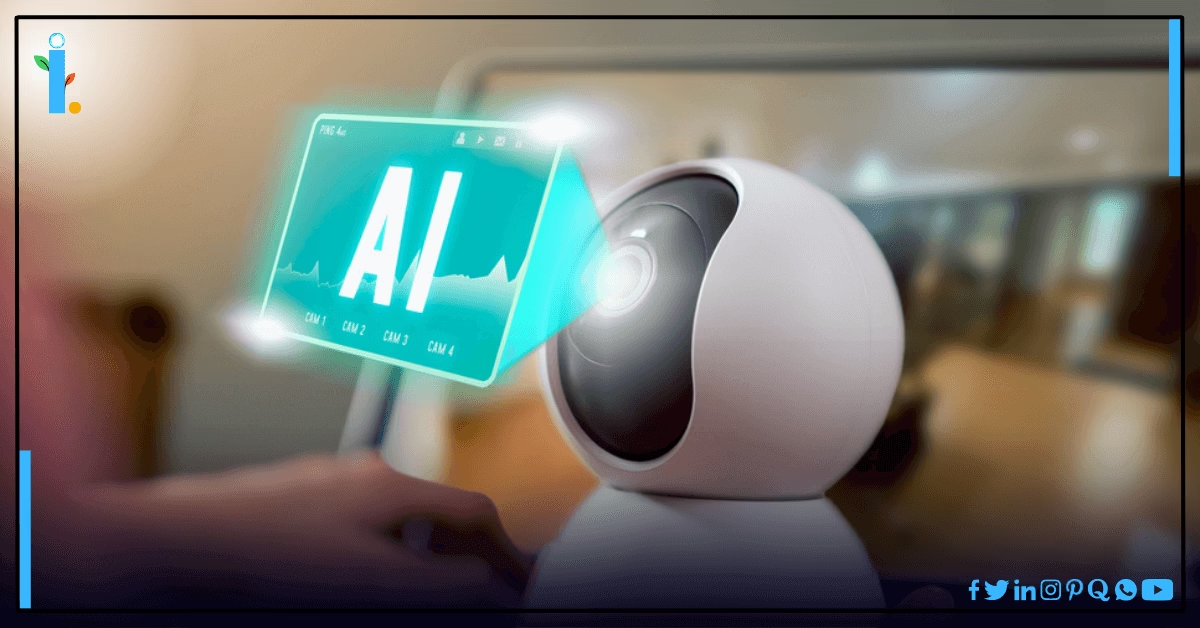
In recent years, the number of cyber threats has increased exponentially, with cybercriminals becoming more sophisticated in their attacks. To combat these threats, businesses and organizations are turning to artificial intelligence (AI) as a means of strengthening their cyber defenses. In this article, we will discuss how AI is revolutionizing cyber security and the benefits it offers for businesses of all sizes.
Introduction to Artificial Intelligence in Cyber Security
Cyber Security is a major concern for businesses and organizations of all sizes. Hackers and cybercriminals are constantly finding new ways to exploit vulnerabilities in computer systems and steal sensitive information. Traditional security measures such as firewalls and antivirus software are no longer enough to protect against these threats. This is where AI comes in.
AI is the ability of machines to perform tasks that would typically require human intelligence, such as learning, reasoning, and problem-solving. In the context of cyber security, AI can be used to detect and respond to threats in real-time, making it a valuable tool for businesses and organizations.
How AI is Used in Cyber Security
AI is used in cyber security in a variety of ways, including:
Threat Detection
AI algorithms can be trained to detect potential threats in real-time, such as malware or phishing attacks. This allows businesses to respond quickly to any potential threats before they cause significant damage.
Fraud Detection
AI can also be used to detect fraudulent activity, such as credit card fraud or identity theft. Machine learning algorithms can analyze patterns in data to identify any unusual activity, and alert businesses to potential fraud.
Vulnerability Management
AI can help businesses identify vulnerabilities in their systems before they are exploited by cybercriminals. Machine learning algorithms can analyze large amounts of data to identify potential weaknesses, allowing businesses to take action to strengthen their defenses.
Incident Response
AI can also be used to automate incident response, allowing businesses to respond quickly to any security breaches. Machine learning algorithms can analyze data to determine the severity of an incident, and provide guidance on the best course of action to take.
Benefits of AI in Cyber Security
The use of AI in cyber security offers a number of benefits for businesses, including:
Improved Threat Detection
AI algorithms can detect potential threats much faster than humans, allowing businesses to respond quickly to any potential security breaches.
Reduced Risk of Human Error
AI can automate many tasks that would typically require human intervention, reducing the risk of human error.
Enhanced Incident Response
AI can help businesses respond to security breaches more quickly and effectively, minimizing the impact on their operations.
Improved Cost-Effectiveness
AI can reduce the need for human intervention in many aspects of cyber security, reducing costs for businesses.
[google_ad]
Challenges of AI in Cyber Security
While AI offers many benefits for cyber security, there are also challenges that must be addressed. These challenges include:
Bias
AI algorithms can be biased based on the data they are trained on. This can lead to inaccurate results and potential security vulnerabilities.
Complexity
AI can be complex and difficult to implement, requiring specialized knowledge and expertise.
Integration
AI systems must be integrated with existing security infrastructure, which can be a complex process.
Conclusion
AI is revolutionizing cyber security, offering businesses and organizations a powerful tool for detecting and responding to potential threats. While there are challenges to be addressed, the benefits of AI in cyber security are clear. By leveraging the power of AI, businesses can better protect themselves against cyber threats and keep their sensitive information safe.
FAQs
- What is artificial intelligence in cyber security?
- AI in cyber security is the use of machine learning algorithms to detect, prevent and respond to cyber threats.
- What are the benefits of AI in cyber security?
- AI in cyber security offers improved threat detection, reduced risk of human error, enhanced incident response, and improved cost-effectiveness.
- How is AI used in cyber security?
- AI is used in cyber security for threat detection, fraud detection, vulnerability management, and incident response.
- What are the challenges of AI in cyber security?
- Challenges of AI in cyber security include bias, complexity, and integration with existing security infrastructure.
- How can businesses integrate AI into their cyber security strategy?
- Businesses can integrate AI into their cyber security strategy by identifying areas where AI can provide value, investing in the necessary technology and expertise, and ensuring that AI is integrated with existing security infrastructure.


KEEP READING

AI personalized learning in K-12 EdTech means software that changes what a student sees next based on how they just answered, not a fixed chapter everyone works through at the [...]

Supply chain cybersecurity vulnerabilities now drive nearly half of all corporate breaches, and the window to fix them has almost closed. Third parties were involved in 48% of breaches in [...]

A finance employee at engineering firm Arup authorized 15 wire transfers worth roughly $25.6 million after joining a video call with people who looked and sounded exactly like his CFO [...]

Machine translation catches the same three words wrong every time a contract crosses a language line. That pattern, not a general definition of language AI, is where natural language [...]

The best antivirus for Windows 11 gaming right now is whichever product keeps CPU load under roughly 5% during full-screen play and doesn't spike RAM mid-match. Microsoft Defender, ESET HOME [...]