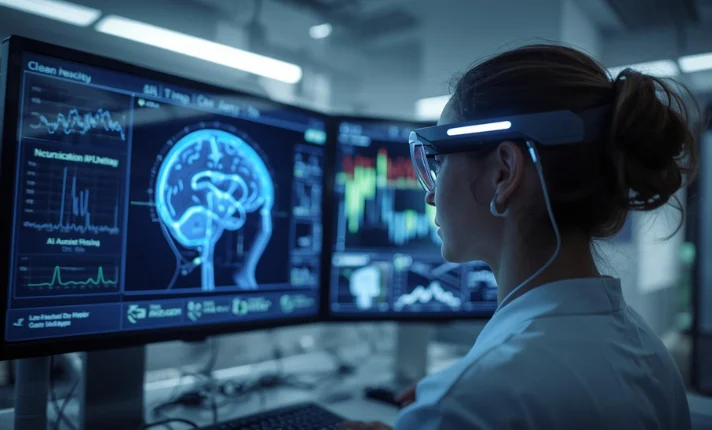
Early detection technology for neurological disorders is transforming how we identify conditions like Alzheimer’s, Parkinson’s, and epilepsy long before severe symptoms appear. Instead of reacting late, these advanced tools use AI, brain imaging, biomarkers, and wearable devices to detect subtle changes in the brain early. This means faster diagnosis, better treatment outcomes, and improved quality of life. In this guide, you’ll learn how these technologies work, what tools are leading the space, and how they are shaping the future of healthcare.
What Is Early Detection Technology for Neurological Disorders?
Early detection technology for neurological disorders refers to modern tools and systems designed to identify brain-related diseases at their earliest stages, often before noticeable symptoms begin.
Simple meaning
It’s about finding problems in the brain early, when treatment has the best chance to work.
Why this matters
Many neurological diseases develop slowly. By the time symptoms show, damage may already be significant.
Common conditions detected early
- Alzheimer’s disease
- Parkinson’s disease
- Epilepsy
- Multiple sclerosis
- Stroke risk conditions
Why Early Detection of Neurological Disorders Is Critical
The hidden problem of late diagnosis
Most neurological disorders are diagnosed too late. Patients often ignore early signs like mild memory loss or small motor changes.
Impact of delayed detection
- Reduced treatment effectiveness
- Faster disease progression
- Higher healthcare costs
Emotional and financial burden
Families often face long-term care challenges, stress, and unexpected expenses.
How Early Detection Technology for Neurological Disorders Works
Understanding how these systems work helps you trust and use them better.
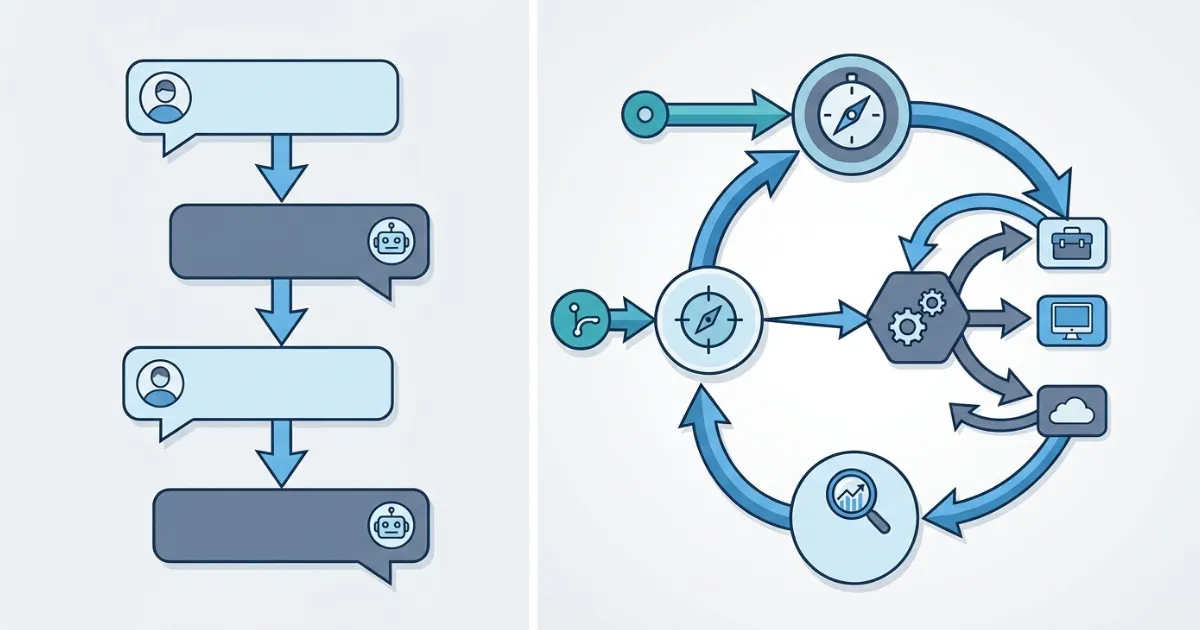
Artificial Intelligence and machine learning
AI analyzes large datasets from brain scans, genetics, and behavior. It detects patterns humans may miss.
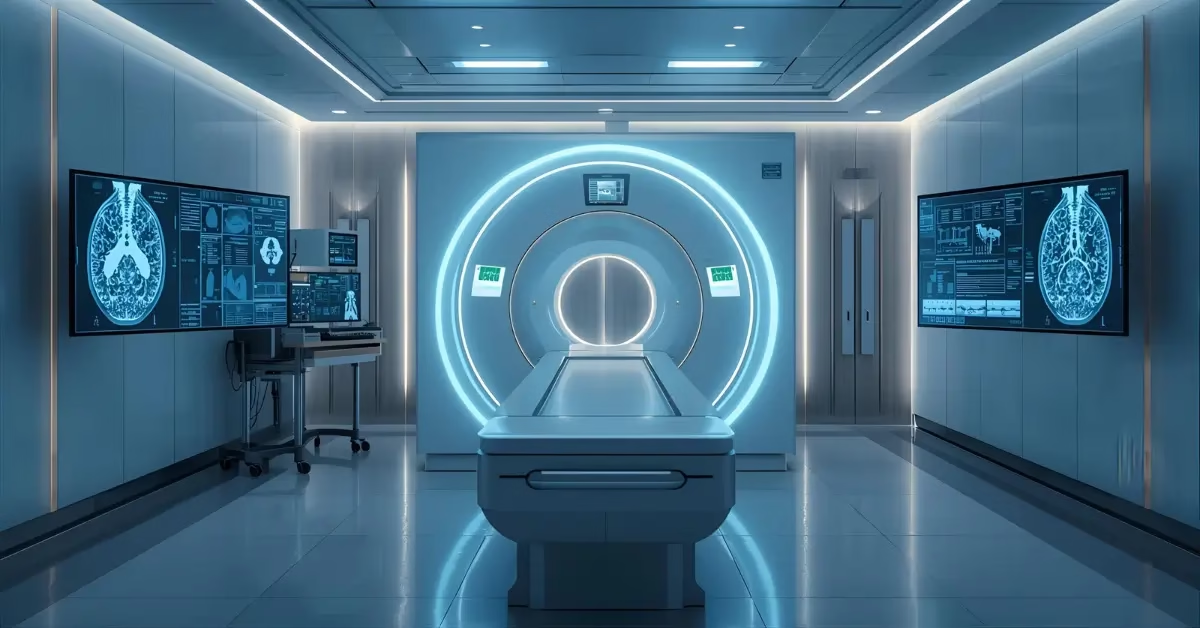
Brain imaging technologies
- MRI (Magnetic Resonance Imaging) shows brain structure
- CT scans provide quick imaging
- PET scans detect metabolic activity
These tools identify early changes in brain tissue.
Biomarkers and genetic testing
Biomarkers are measurable signals in blood or cerebrospinal fluid. For example:
- Protein buildup linked to Alzheimer’s
- Genetic mutations linked to Parkinson’s
Wearable devices
Smart devices track movement, sleep, and heart rate. Small changes can signal early neurological issues.
Digital biomarkers
Apps track typing speed, speech patterns, and memory tasks. These subtle behaviors can reveal early decline.
Key Types of Early Detection Technology for Neurological Disorders
Neuroimaging advancements
High-resolution imaging detects micro-level brain changes earlier than ever before.
Blood-based diagnostic tests
New tests can detect disease-related proteins without invasive procedures.
EEG and brain signal tools
Electroencephalography measures electrical brain activity, useful for epilepsy and brain disorders.
Mobile cognitive testing apps
Apps assess memory, attention, and reaction time regularly.
Voice and movement analysis tools
AI analyzes speech pauses or tremors, which can indicate early Parkinson’s.
Real-World Applications and Use Cases
Early Alzheimer’s detection
AI scans detect amyloid plaques years before symptoms appear.
Parkinson’s monitoring
Wearables track tremors and movement changes continuously.
Stroke prediction
AI systems analyze risk factors and alert patients early.
Multiple sclerosis tracking
Regular imaging helps monitor disease progression.
Mental health and cognitive decline
Apps detect changes in mood, memory, and behavior patterns.
Benefits of Early Detection Technology for Neurological Disorders
Better treatment outcomes
Early intervention slows disease progression.
Personalized care
Doctors can tailor treatment based on early data.
Improved quality of life
Patients maintain independence longer.
Lower healthcare costs
Preventing severe stages reduces long-term expenses.
Challenges and Limitations You Should Know
Accuracy concerns
Some tools may produce false positives or false negatives.
Privacy risks
Health data collection raises concerns about data security.
High cost
Advanced imaging and tests can be expensive.
Lack of standardization
Not all tools are approved or widely accepted yet.
Latest Innovations in Early Detection Technology (2025–2026)
AI-powered predictive systems
These systems predict disease risk years in advance.
At-home diagnostic kits
Simple blood or saliva tests are becoming available for home use.
Cloud-based monitoring
Patient data is analyzed in real-time through cloud platforms.
Telemedicine integration
Doctors can monitor patients remotely using connected devices.
Role of Artificial Intelligence in Early Detection
Pattern recognition
AI identifies complex patterns in brain scans and behavior.
Risk prediction
Algorithms assign risk scores based on multiple data points.
Comparison with traditional methods
AI is faster and often more precise, but still works best alongside doctors.
Traditional vs Modern Detection Methods
| Feature | Traditional Methods | Modern Technology |
|---|---|---|
| Speed | Slow | Fast |
| Accuracy | Moderate | High |
| Cost | Variable | Initially high |
| Accessibility | Limited | Increasing |
How Patients and Doctors Use These Technologies Today
Clinical integration
Hospitals combine AI tools with traditional diagnostics.
Remote monitoring
Patients use wearables at home for continuous tracking.
Preventive healthcare
Doctors focus on early risk detection rather than late treatment.
Future of Early Detection Technology for Neurological Disorders
Predictive healthcare
Future systems will predict diseases before symptoms appear.
Brain-computer interfaces
Devices may directly monitor brain activity in real time.
Personalized diagnostics
Each patient will get a custom risk profile.
Global accessibility
Costs are expected to drop, making technology widely available.
How to Choose the Right Early Detection Solution
Key factors
- Accuracy and reliability
- Cost and affordability
- Ease of use
- Medical approval
Questions to ask your doctor
- Is this technology clinically tested?
- What are the risks?
- How accurate are the results?
Red flags
- No scientific backing
- Overpromising results
- Lack of regulatory approval
People Also Ask
What is the best technology for early detection of neurological disorders?
There is no single best tool. A combination of AI, brain imaging, and biomarkers provides the most accurate results.
Can AI detect neurological diseases early?
Yes, AI can detect patterns in data that suggest early disease stages, often before symptoms appear.
Are there at-home tests available?
Yes, some early-stage tools like cognitive apps and basic biomarker tests are available for home use.
FAQs
How accurate are early detection technologies?
Accuracy varies, but many AI-based tools are improving rapidly and show high reliability when combined with medical evaluation.
Are these technologies safe?
Most approved tools are safe. Always use technologies recommended by healthcare professionals.
Can early detection prevent neurological disorders?
It may not prevent them completely, but it can delay progression and improve outcomes.
What is the cost of these technologies?
Costs range from affordable apps to expensive imaging systems. Prices are decreasing over time.
Who should consider early screening?
People with family history, aging individuals, or those experiencing mild symptoms should consider screening.
Conclusion: A New Era in Brain Health
Early detection technology for neurological disorders is changing healthcare from reactive to proactive. Instead of waiting for symptoms, we can now identify risks early and act sooner. While challenges remain, the benefits are clear. With ongoing innovation, these technologies will become more accurate, accessible, and essential in everyday healthcare.


KEEP READING
Brain computer interfaces (BCIs) allow amputees to control prosthetic limbs using signals generated by the nervous system. These systems detect brain activity, nerve signals, or muscle-related electrical patterns, convert them [...]
Emotion AI: Affective computing for mental health empowers clinicians and patients with advanced, real-time insights into emotional states. By synthesizing facial, vocal, and physiological signals, modern affective systems can detect [...]
The human brain is both spatially and temporally complex. Traditional methods like EEG offer millisecond-level temporal resolution but suffer from centimeter-level spatial coarseness, while MRI gives high spatial but low [...]
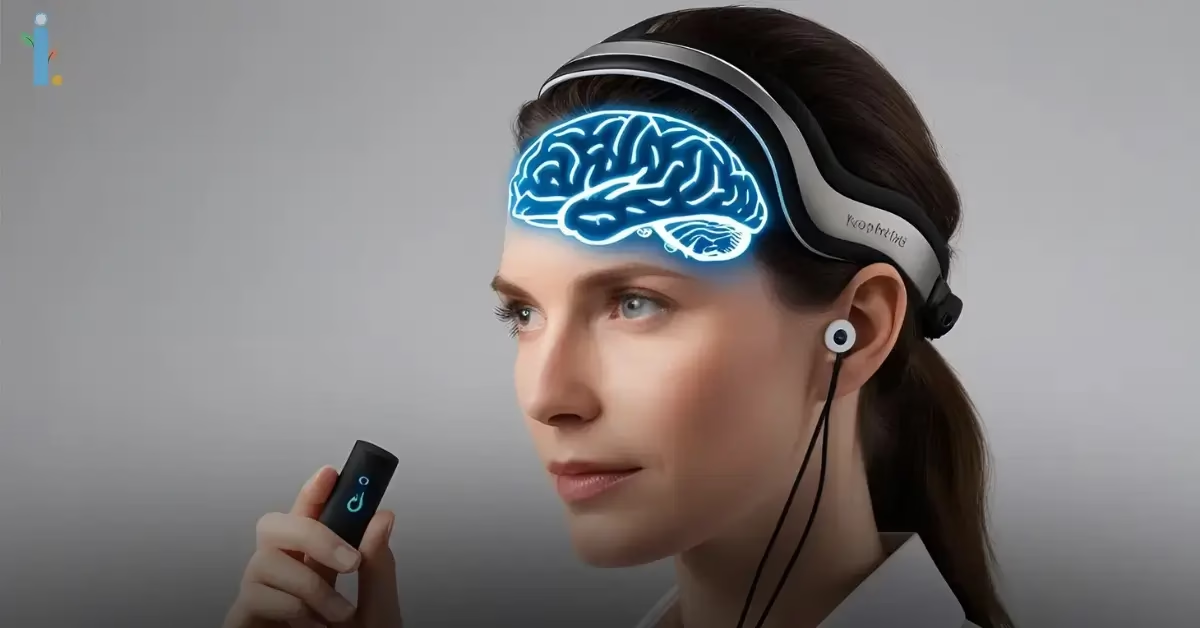
Wearable neurotechnology devices for brain activity are lightweight, non-invasive tools—like EEG headbands or neurostimulation caps—that monitor or modulate brain function in real time. These smart wearables use sensors to detect [...]