Heart rate monitoring has split into two very different jobs: tracking your resting pulse and HRV all day, and keeping up with your heart during a hard workout. Most fitness trackers market themselves as doing both. Most don’t do both equally well. This guide covers the best fitness trackers for heart rate monitoring in 2026, what separates them by use case, what the sensor science actually says about accuracy, and the one scenario where every wrist-based tracker fails.
What “Heart Rate Monitoring” Actually Means on a Fitness Tracker
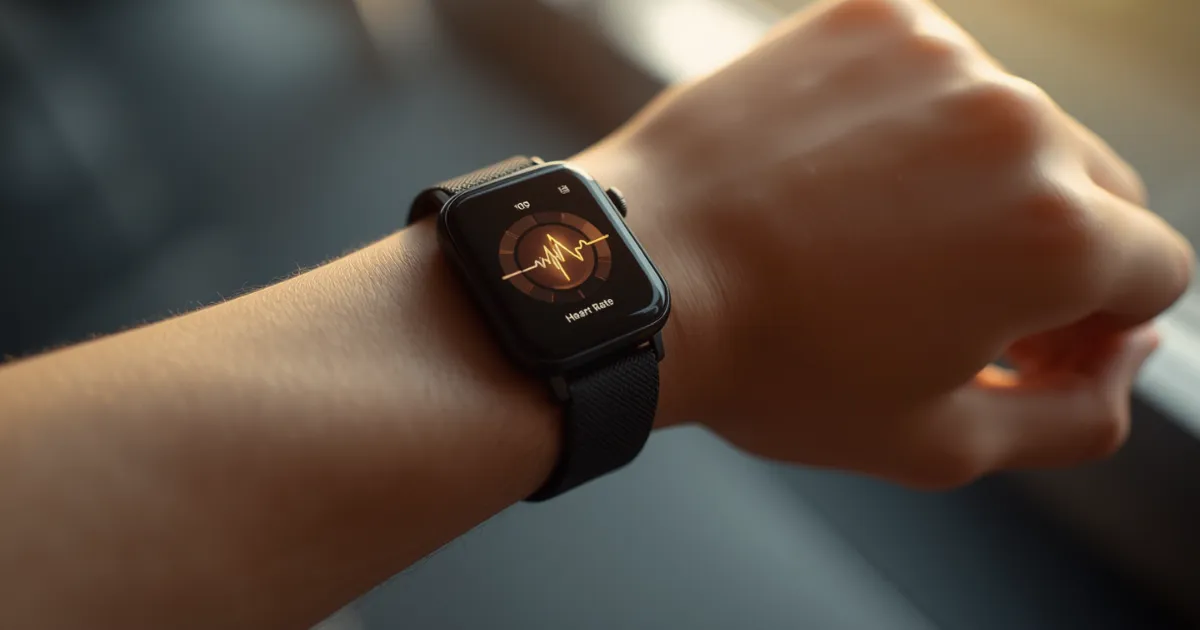
Every fitness tracker sold today uses photoplethysmography (PPG) — green or sometimes red/infrared LEDs that shine light through your skin and measure changes in blood flow volume. Your heart beats, blood pulses, light absorption changes, and the device calculates your beats per minute.
That works well at rest. The problem starts when you move.
During physical activity, the optical sensor can lock onto the periodic signal from your repetitive movement — walking cadence, running stride — and mistake that motion for a cardiovascular cycle. Researchers call it the “signal crossover” effect. It’s why your tracker sometimes shows 145 BPM at the start of a run when you’re nowhere near that level of effort. Nature
A February 2025 PLOS ONE study from the University of British Columbia also found that darker skin tones reduce the accuracy of wrist-based PPG sensors, because higher melanin concentrations absorb more green light and weaken the signal — particularly as exercise intensity rises. PLOS
So “heart rate monitoring” on the box and heart rate monitoring you can actually rely on during a 5-round HIIT circuit are two different things.
The Best Fitness Trackers for Heart Rate Monitoring in 2026
Apple Watch Series 10 — Best All-Around for Heart Health
The Apple Watch Series 10 is the only consumer wearable that combines FDA-cleared ECG, continuous AFib detection, irregular rhythm notifications, and optical HR in one device. If you’re on an iPhone and you have any cardiac concerns — or just want the most complete picture — this is the pick.
Battery life is around 18 hours, which is its clearest limitation. You won’t get overnight HRV tracking unless you charge it during the day. The optical sensor accuracy during moderate workouts is among the best on wrist-based devices, though it still drops during rapid intensity swings like Tabata or CrossFit.
Price: from $399.
Garmin Venu 3 — Best for Workout-Grade Heart Rate Data
Garmin’s optical sensor uses multi-path technology — multiple LED wavelengths sampled at a higher rate — which reduces the signal crossover problem compared to single-path systems. The Venu 3 also runs Body Battery and HRV Status nightly, giving you a consistent baseline that updates every morning.
During steady-state cardio — running, cycling, rowing — the Venu 3 is consistently close to chest strap readings. During weight training with a lot of arm movement, it drifts. Garmin’s Connect app lets you manually flag segments where the reading looked off, which helps if you’re training with heart rate zones.
Battery life: 10 days typical use, 6 days with GPS.
Price: from $349.
Polar Vantage V3 — Best for Serious Athletes
At $499, the Polar Vantage V3 consistently matched or beat the Apple Watch during high-intensity exercise in independent comparisons. Price buys features and ecosystem, not necessarily sensor quality. Verold
Polar’s Precision Prime sensor fusion uses optical sensors and skin contact electrodes simultaneously, cross-referencing both signals to filter motion artifacts. It’s not a chest strap, but it’s the closest a wrist device gets to one during intense activity. Polar also connects natively to the H10 chest strap if you need certified accuracy for a race or a clinical test.
The Vantage V3 runs training load, recovery status, and Orthostatic Test (a morning HRV protocol) natively. It’s not a casual wearable — it’s built for athletes who track specific training blocks.
Price: $499.
Withings ScanWatch 2 — Best for Medical-Grade Monitoring in a Watch Form
If your doctor told you to monitor your heart rate, the Withings ScanWatch 2 is worth attention. It has an FDA/CE-cleared ECG sensor, optical SpO2 monitoring, and a physical watch design that doesn’t look like a tech gadget.
The ScanWatch 2 records an ECG on demand in 30 seconds, stores it in the Health Mate app, and generates a PDF you can email to your cardiologist. That workflow — tracker to readable document — is more practical than what most smartwatches offer.
Battery life: up to 30 days. GPS: no.
Price: from $349.
Oura Ring 4 — Best for Resting Heart Rate and HRV Accuracy
Independent studies have ranked Oura as the most accurate wearable on the market for monitoring resting heart rate and heart rate variability. The Oura Ring 4 achieves this through Smart Sensing technology — a higher number of sensors that adapt to unique finger shapes, resulting in fewer gaps in tracking. Wareable
The ring sits on your finger, not your wrist. Finger arteries are closer to the surface than wrist arteries, and fingers don’t swing back and forth when you run. That’s why resting and sleep HR readings from the Oura Ring beat most wrist trackers on accuracy.
What it doesn’t do: real-time workout heart rate. The ring doesn’t have a display, and the app shows workout HR after the fact. If you train with heart rate zones in real time, the ring alone won’t work.
Requires a $5.99/month subscription for full insights.
Price: $349.
Fitbit Charge 6 — Best for Most People Under $160
The Fitbit Charge 6 offers reliable heart rate data, onboard GPS, and support for activity types like kickboxing and kayaking, with battery life up to six days per charge. tomsguide
It lacks ECG on most markets, but it has continuous HR monitoring, a daily readiness score, and Active Zone Minutes — a metric that counts time in fat-burn, cardio, and peak heart rate zones weighted by intensity. For someone tracking general fitness without cardiac concerns, that’s enough.
At $159, the Charge 6 is the value pick in 2026.
Xiaomi Smart Band 9 — Best Under $40
The Xiaomi Smart Band 9 at $35 delivers more than its price suggests for basic heart rate trend data. It gives continuous 24-hour HR monitoring, high heart rate alerts, SpO2, and sleep tracking with no subscription. Verold
Don’t expect workout accuracy during hard sessions. Expect accurate resting and moderate-activity data, a 14-day battery, and a device light enough that you forget it’s there.
What the Sensor Research Actually Says (The Part Most Guides Skip)
A December 2025 study published in Sensors tested six HR monitors across 28 healthy adults during burpees, treadmill running, and rest. The Polar Verity Sense optical armband worn on the forearm produced the lowest error — a mean absolute percentage error of about 1.6% — and the strongest agreement with the Polar H10 chest strap. The Garmin Forerunner 55 and Whoop worn on the wrist showed the highest error values. MDPI
The pattern across multiple studies is consistent: placement matters as much as brand. The forearm and upper arm reduce motion artifact more than the wrist, because those body parts don’t generate the same rhythmic movement during running and cycling.
A 2025 JMIR Cardio validation study confirmed that the Polar Verity Sense worn on the upper arm produced accuracy competitive with ECG-based chest straps across a range of intensities from lying down to HIIT. The Polar Vantage V2 on the wrist had moderate accuracy, with performance varying significantly by activity type. JMIR Cardio
The practical upside: if you train hard and care about accurate HR zones, a forearm optical sensor like the Polar Verity Sense ($89) worn during workouts — paired with a wrist tracker for all-day monitoring — gives you better data than any single wrist device.
When Your Fitness Tracker Heart Rate Data Is Wrong (The “It Depends” Case)
Standard advice says: wear your tracker snugly, one finger-width above the wrist bone. That’s correct for most uses. It breaks down in three specific situations.
Weight training with arms overhead. During pull-ups, overhead press, or handstands, blood partially drains from the wrist. The PPG signal weakens and trackers frequently show 20–30 BPM lower than actual heart rate, then overcorrect when you rest.
Cold weather exercise. Cold causes vasoconstriction — blood vessels near the surface narrow to conserve heat. The optical sensor gets less signal. Trackers worn over a sleeve during winter runs often show gaps or flat-line segments in heart rate data. Running in 5°C with your sleeve over the tracker is approximately equivalent to running with the tracker not on at all for HR purposes.
Tattoos on the wrist. Dark or dense ink blocks the green LED light. Multiple tracker manufacturers — Fitbit, Apple, Garmin — acknowledge in their support documentation that tattooed skin can produce inaccurate readings. The sensor reads the ink instead of the tissue beneath it.
In all three cases, a chest strap or forearm optical sensor solves the problem directly.
ECG vs. Optical HR: What Each Actually Detects
Most people confuse these two features.
Optical HR (PPG) detects blood flow changes continuously, giving you beats per minute during workouts and throughout the day. It’s good enough for zone-based training, trend analysis, and sleep monitoring.
ECG records the electrical activity of the heart. It can detect atrial fibrillation (AFib), a specific arrhythmia pattern. Consumer ECG sensors in the Apple Watch Series 10, Samsung Galaxy Watch 7, and Withings ScanWatch 2 generate a single-lead ECG — equivalent to Lead I on a clinical 12-lead ECG. That’s enough to detect AFib and pass the reading to a cardiologist, but it doesn’t replace a diagnostic ECG for other arrhythmias or structural conditions.
If your doctor wants to monitor you for AFib specifically, a watch-based ECG is a credible tool. If they want a full cardiac workup, it’s not.
People Also Ask
Which fitness tracker has the most accurate heart rate monitor?
For resting heart rate and HRV, the Oura Ring 4 ranks highest in independent studies. For workout accuracy on the wrist, the Apple Watch Series 10 and Polar Vantage V3 lead the category. For pure workout accuracy regardless of form factor, a chest strap — especially the Polar H10 — remains the most accurate option and costs around $70.
Do fitness trackers measure heart rate accurately during exercise?
At moderate, steady-state intensities like running or cycling, accuracy is generally within 5 BPM of a chest strap. During high-intensity intervals with rapid HR changes, wrist-based optical sensors regularly show errors of 10–20 BPM or more. The more chaotic the movement, the less reliable the optical reading.
Can a fitness tracker detect heart problems?
Devices with FDA-cleared ECG — Apple Watch Series 10, Samsung Galaxy Watch 7, Withings ScanWatch 2 — can detect atrial fibrillation and generate readings a cardiologist can review. They don’t diagnose heart attacks, structural problems, or most arrhythmias other than AFib. They’re screening tools, not diagnostic instruments.
FAQs
What’s the difference between heart rate and heart rate variability (HRV)?
Heart rate is beats per minute. HRV measures the time variation between individual heartbeats — a higher number generally indicates better autonomic nervous system recovery. HRV is typically measured at rest or during sleep. Most fitness trackers now track both, but HRV accuracy varies widely by device and placement. The Oura Ring 4 and Garmin devices with overnight HRV Status are among the more reliable options for consistent HRV tracking.
Do I need ECG on my fitness tracker?
Most people don’t. ECG on consumer wearables is designed primarily for AFib screening — it’s most relevant if you have a personal or family history of cardiac arrhythmia, or if a doctor has asked you to monitor your rhythm. For general fitness tracking, continuous optical HR is sufficient. ECG adds cost and sometimes reduces battery life.
Why does my tracker show weird heart rate numbers during weightlifting?
Weight training creates motion artifact — the sensor can’t distinguish between your heartbeat and your arm moving. During dynamic movements with overhead arm extension, blood flow to the wrist also changes, weakening the signal. If HR accuracy matters during strength training, a chest strap worn under your shirt is the most practical fix.
Can I use a fitness tracker instead of a medical heart rate monitor?
For general wellness and fitness, yes. For clinical monitoring of a diagnosed condition, check with your doctor. Consumer trackers aren’t cleared for diagnosis or continuous medical monitoring. The FDA-cleared ECG feature on certain watches is designed for episodic detection, not 24/7 clinical-grade monitoring.
Is paying more for a fitness tracker worth it for better heart rate data?
Partially. A $500 Polar Vantage V3 has genuinely better workout HR accuracy than a $40 Xiaomi band. But a $500 Apple Watch has worse workout HR accuracy than a $70 chest strap. Price strongly correlates with features, software ecosystem, and build quality — not necessarily with sensor accuracy. For pure HR measurement during high-intensity training, sensor placement and device type (chest strap vs. wrist) matter more than the brand’s price tier.


KEEP READING

Smart glasses designed for cycling navigation are changing how cyclists move through roads, trails, and cities. Instead of looking down at a phone or handlebar screen, you see directions right [...]
Wearable UV sensors for sun exposure monitoring are revolutionizing how we protect our skin in the era of rising UV radiation and skin cancer awareness. These small, smart devices track [...]
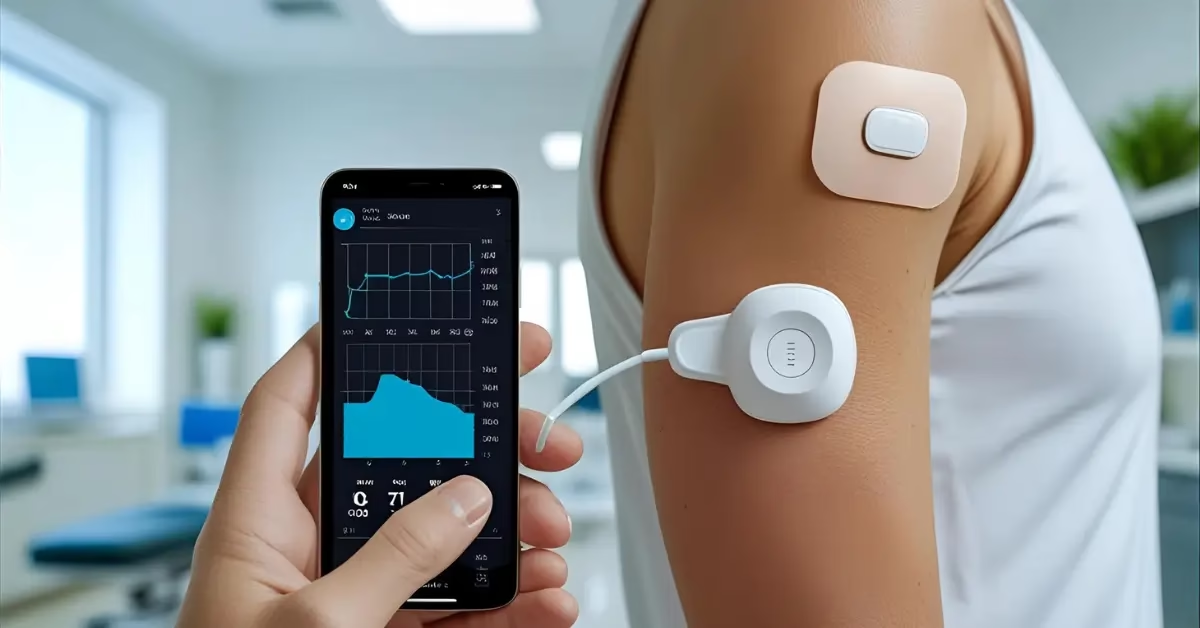
Wearable glucose monitors for diabetes management are revolutionizing how people with diabetes track and control their blood sugar. By providing near-continuous data, real-time alerts, and seamless connectivity to smartphones and [...]

Imagine a world where one misstep doesn’t mean hours of vulnerability on the floor—where an intelligent wearable springs into action the moment a senior stumbles. In this guide, you’ll discover [...]
We all know that sleep is essential—but did you know that REM (Rapid Eye Movement) sleep is the stage when your brain processes memories and emotions? Without enough REM, you [...]