Table of Contents
- What Are IoT Sensor Integration Strategies for Smart Cities?
- Why Cities Struggle With IoT Sensor Integration
- Core Components of IoT Sensor Integration in Smart Cities
- Types of IoT Sensors Used in Smart Cities
- Top IoT Sensor Integration Strategies for Smart Cities
- Step-by-Step Framework for IoT Sensor Integration
- Interoperability: The Backbone of Smart City IoT
- Data Management and Analytics in IoT Integration
- Security Challenges in IoT Sensor Integration
- Scalability Considerations for Growing Smart Cities
- Real-World Examples of Smart City IoT Integration
- Cost Factors and ROI of IoT Sensor Integration
- Common Mistakes to Avoid
- Future Trends in IoT Sensor Integration for Smart Cities
- People Also Ask
- FAQs
- Conclusion
IoT sensor integration strategies for smart cities are the backbone of modern urban transformation. Cities today are not just adding sensors, they are building connected ecosystems that improve traffic, energy use, safety, and daily life. But here’s the real challenge: installing sensors is easy, integrating them into a unified system that actually works is hard. This guide breaks down practical, real-world strategies you can use to design, deploy, and scale IoT sensor networks in smart cities. Whether you’re planning a new system or improving an existing one, this article gives you clear, actionable steps.

What Are IoT Sensor Integration Strategies for Smart Cities?
Definition of IoT in Urban Infrastructure
IoT, or Internet of Things, refers to connected devices that collect and exchange data. In cities, these include traffic sensors, air quality monitors, smart meters, and surveillance systems.
Role of Sensors in Smart Ecosystems
Sensors act as the “eyes and ears” of a smart city. They collect real-time data such as:
- Traffic flow
- Pollution levels
- Energy usage
- Public safety events
Without proper integration, this data stays isolated and useless.
Why Integration Matters More Than Deployment
Many cities fail not because of poor sensors, but because systems don’t talk to each other. Integration ensures:
- Data flows across departments
- Systems respond in real time
- Decision-making becomes data-driven
Why Cities Struggle With IoT Sensor Integration
Fragmented Infrastructure
Cities often run separate systems for transport, utilities, and security. These systems rarely connect.
Vendor Lock-In
Different vendors use different technologies. This creates compatibility issues.
Data Silos
Data collected by one department is not shared with others, limiting its value.
Legacy Systems vs Modern IoT
Older infrastructure may not support modern communication protocols like MQTT or CoAP.
Core Components of IoT Sensor Integration in Smart Cities
Sensors
Devices that collect data. Examples:
- Air quality sensors
- Traffic cameras
- Smart meters
Connectivity
How sensors send data:
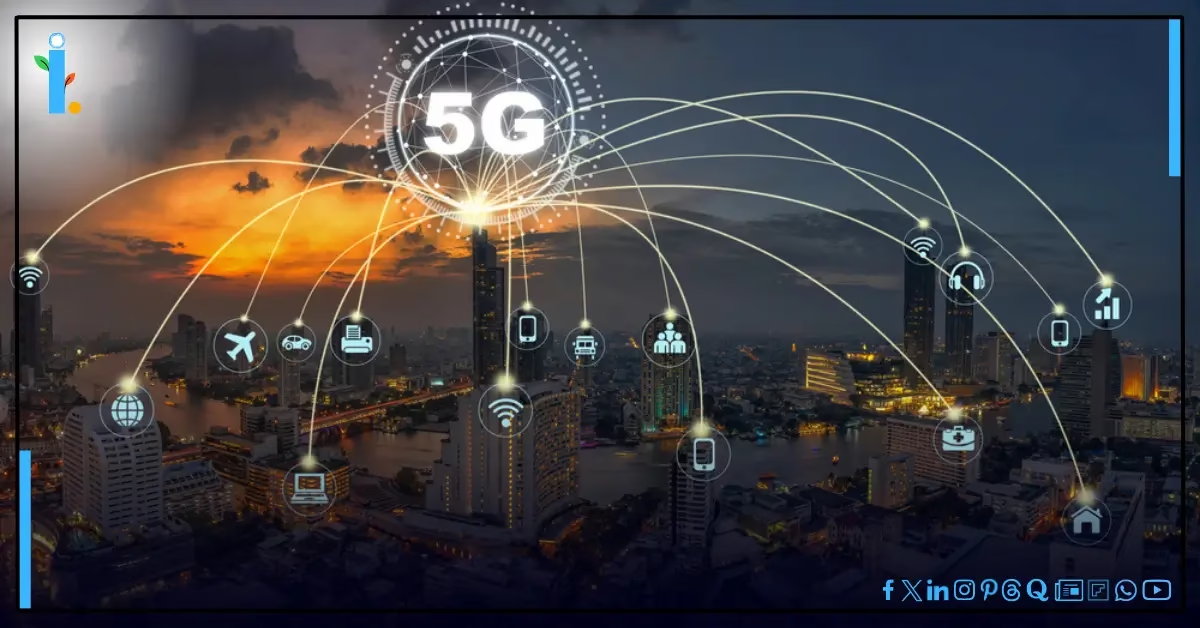
- 5G (high speed, low latency)
- LPWAN (low power wide area network)
- Wi-Fi 6
Data Platforms
Cloud systems that store and process data, such as AWS IoT or Azure IoT Hub.
Edge Computing
Processing data closer to the source to reduce delay.
APIs and Middleware
Software layers that connect different systems and allow communication.
Types of IoT Sensors Used in Smart Cities
Environmental Sensors
Monitor air quality, temperature, and humidity.
Traffic Sensors
Track vehicle movement and congestion.
Energy Sensors
Measure electricity, gas, and water usage.
Public Safety Sensors
Include cameras and emergency detection systems.
Waste Management Sensors
Detect bin fill levels to optimize collection routes.
Top IoT Sensor Integration Strategies for Smart Cities
Use Open Standards and Protocols
Protocols like MQTT (Message Queuing Telemetry Transport) and CoAP (Constrained Application Protocol) allow devices from different vendors to communicate.
Platform-Based Integration
Use a central platform to manage all devices and data instead of separate systems.
Edge Computing for Real-Time Processing
Process data locally to reduce latency. For example, traffic lights can adjust instantly based on vehicle flow.
API-First Architecture
Design systems where all services communicate through APIs. This makes integration easier and scalable.
Hybrid Cloud Approach
Combine cloud and on-premise systems for better flexibility and control.
Modular Deployment
Start small, then expand. This reduces risk and allows testing before full rollout.
Step-by-Step Framework for IoT Sensor Integration
Step 1: Define Goals and KPIs
Decide what problems you want to solve. For example:
- Reduce traffic congestion by 20%
- Improve air quality monitoring coverage
Step 2: Audit Existing Infrastructure
Check what systems already exist and how they operate.
Step 3: Choose Compatible Sensors
Ensure sensors support standard protocols and can integrate easily.
Step 4: Build Integration Architecture
Design how devices, networks, and platforms will connect.
Step 5: Implement Data Management Systems
Set up data pipelines, storage, and analytics tools.
Step 6: Test and Scale
Run pilot projects, fix issues, then expand city-wide.
Interoperability: The Backbone of Smart City IoT
What Is Interoperability?
It means different systems can work together without issues.
Key Standards
- oneM2M
- FIWARE
- OCF (Open Connectivity Foundation)
Avoiding Vendor Lock-In
Always choose solutions that support open standards.
Data Management and Analytics in IoT Integration
Real-Time Processing
Immediate analysis for time-sensitive decisions like traffic control.
Big Data Pipelines
Handle large volumes of sensor data using tools like Apache Kafka.
AI and Predictive Analytics
Use machine learning to predict traffic jams or energy demand.
Visualization Dashboards
Display data in simple dashboards for city officials.
Security Challenges in IoT Sensor Integration
Common Risks
- Unauthorized access
- Data breaches
- Device hijacking
Protection Strategies
- End-to-end encryption
- Strong device authentication
- Regular updates and patches
Zero Trust Architecture
Assume no device is trusted by default. Verify everything.
Scalability Considerations for Growing Smart Cities
Horizontal vs Vertical Scaling
- Horizontal: Add more devices
- Vertical: Upgrade existing systems
Network Planning
Ensure enough bandwidth for future growth.
Future-Proof Design
Choose flexible systems that can adapt to new technologies.
Real-World Examples of Smart City IoT Integration
Barcelona
Smart lighting adjusts brightness based on activity, saving energy.
Singapore
Uses IoT sensors for traffic control and public safety.
Dubai
Implements smart surveillance and infrastructure monitoring.
Cost Factors and ROI of IoT Sensor Integration
Initial Costs
- Sensors
- Network setup
- Software platforms
Ongoing Costs
- Maintenance
- Updates
- Data storage
Long-Term Benefits
- Reduced energy use
- Better traffic flow
- Improved public safety
Common Mistakes to Avoid
- Ignoring interoperability
- Poor data management
- Overcomplicating systems
- Weak security planning
Future Trends in IoT Sensor Integration for Smart Cities
AI Automation
Systems will make decisions without human input.
Digital Twins
Virtual models of cities for simulation and planning.
6G Networks
Even faster and more reliable connectivity.
Sustainable IoT
Energy-efficient devices and green technology.
People Also Ask
What are IoT sensor integration strategies for smart cities?
They are methods used to connect and manage different sensors and systems so they work together efficiently.
How do smart city sensors communicate?
They use wireless networks and protocols like MQTT, CoAP, and 5G.
What are the biggest challenges in IoT integration?
Interoperability, security, and data management are the main challenges.
FAQs
How long does IoT integration take in a city?
It depends on size, but pilot projects can take 3 to 12 months, while full deployment may take years.
What protocols are best for smart city IoT?
MQTT and CoAP are widely used because they are lightweight and efficient.
Is IoT integration expensive?
Initial costs are high, but long-term savings often outweigh them.
Can old infrastructure support IoT sensors?
Yes, with proper middleware and upgrades.
How secure are smart city IoT systems?
They can be secure if strong encryption and authentication methods are used.
Conclusion
Building a smart city is not just about adding sensors, it’s about connecting them in a way that delivers real value. The right IoT sensor integration strategies for smart cities focus on interoperability, scalability, and security. Start small, use open standards, and always plan for growth. Cities that get integration right will not just be smarter, they will be more efficient, safer, and better places to live.

Author: Ahmed UA.
With over 13 years of experience in the Tech Industry, I have become a trusted voice in Technology News. As a seasoned tech journalist, I have covered a wide range of topics, from cutting-edge gadgets to industry trends. My work has been featured in top tech publications such as TechCrunch, Digital Trends, and Wired. Follow Website, Facebook & LinkedIn.

KEEP READING

Hyper-personalization in smart city services refers to using fine-grained data (sensor, behavioral, contextual) and advanced AI/ML to tailor public services to the needs of individuals or narrowly defined groups, with [...]

Cost-effective wireless IoT solutions for smart cities begin by strategically selecting low-power, wide-area technologies that deliver maximum coverage with minimal infrastructure investment. We explore the leading LPWAN protocols—NB-IoT, LoRaWAN, LTE-M—and [...]

Smart cities promise enhanced efficiency, sustainability, and quality of life by interconnecting IoT devices, sensors, and urban services—but they also introduce a sprawling attack surface ripe for exploitation. Let's explore [...]

When we talk about building construction technology, we mean everything from the way structures are designed—using digital tools like 3D modeling—to the innovative materials and methods that go into making [...]
Urban streets feel like a pressure cooker. Traffic jams choke city life. Tailpipes spew CO₂ every minute you idle. What if we could turn that chaos into harmony? AI Traffic [...]