Human robot interaction challenges and solutions for seamless collaboration are becoming central to modern automation. As robots move out of isolated cages and into shared human spaces, the focus has shifted from simple task execution to safe, intelligent teamwork. Industries now rely on collaborative robots, advanced AI systems, and real time control technologies to improve productivity without compromising safety. In this guide, you will learn the real challenges organizations face, the technical foundations behind them, and practical solutions that make seamless collaboration possible in factories, hospitals, warehouses, and beyond.
What Is Human Robot Interaction
Human robot interaction, often called HRI, refers to the study and design of systems where humans and robots work together in shared environments. Unlike traditional industrial robots that operate behind safety fences, collaborative robots, often called cobots, are designed to operate beside people.
The difference is critical.
Traditional robots focus on speed and repetition. HRI systems focus on:
-
Safety
-
Communication
-
Trust
-
Adaptability
-
Shared task coordination
Organizations like ISO and IEEE define safety and performance standards that guide collaborative robotics development.
Seamless collaboration means the robot understands human intent, responds quickly, and operates safely without disrupting workflow.
Why Human Robot Interaction Is Transforming Industries
Human robot interaction challenges and solutions for seamless collaboration are not theoretical topics anymore. They are shaping real industries.
Manufacturing and Smart Factories
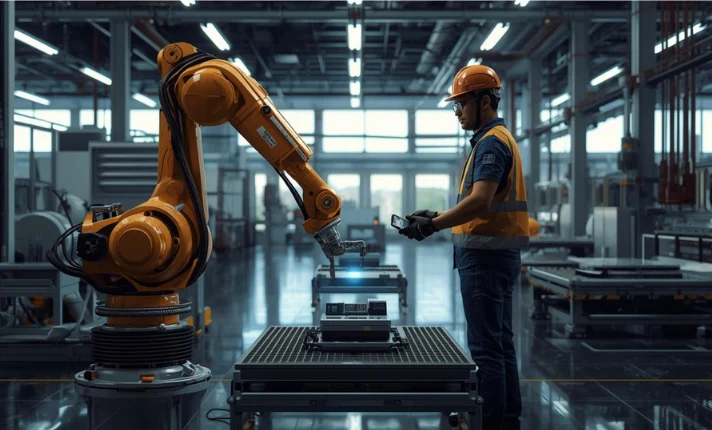
In automotive plants, cobots assist workers in assembly tasks. Instead of replacing humans, they handle repetitive or heavy tasks while workers manage precision and quality.
Healthcare and Surgical Robotics
Systems like da Vinci Surgical System allow surgeons to perform minimally invasive procedures with robotic precision. Here, collaboration is critical. The robot enhances human skill, not replaces it.
Logistics and Warehousing
Companies such as Amazon use robotic systems in fulfillment centers. Workers and robots operate side by side, optimizing picking and transport.
Service and Hospitality
Robots now assist in hotels and restaurants. They deliver items and guide customers, requiring smooth interaction and human awareness.
Major Human Robot Interaction Challenges
Despite progress, human robot interaction challenges and solutions for seamless collaboration remain complex.
Let’s break them down.
Safety Risks in Shared Workspaces
The biggest concern is physical safety.
When humans and robots share space, risks include:
-
Unexpected collisions
-
Excessive force application
-
Sensor failure
-
Software malfunction
Collision Detection and Force Control
Modern cobots use torque and force sensors. These detect abnormal resistance and stop movement within milliseconds. Typical collaborative robots operate under force limits defined by ISO 10218 and ISO/TS 15066.
But challenges remain:
-
Sensor calibration errors
-
Delayed response due to latency
-
Environmental interference
Standards and Compliance
Standards from ISO and IEEE define safe force thresholds, speed limits, and workspace zoning. However, many implementations fail due to poor integration rather than flawed standards.
Communication and Interface Barriers
A robot must understand human intent.
Sounds simple. It is not.
Voice Recognition Limitations
Natural language processing enables voice commands. But background noise, accents, and latency can cause misinterpretation.
For example:
-
Speech recognition delays above 200 milliseconds can disrupt workflow.
-
Cloud based processing increases latency compared to edge systems.
Gesture Recognition Errors
Computer vision models detect hand movements and body posture. Yet poor lighting or occlusion reduces accuracy. Even high performing deep learning models can struggle with cluttered industrial scenes.
Trust and Psychological Resistance
Even if robots are safe, people must feel safe.
Workers often fear:
-
Job replacement
-
Loss of control
-
System unpredictability
Research shows transparency improves trust. When robots explain actions or provide feedback signals, human confidence increases.
Explainable AI helps here. It makes robot decisions understandable.
Technical Limitations
Human robot interaction challenges and solutions for seamless collaboration are deeply technical.
Sensor Fusion Problems
Sensor fusion combines data from cameras, LiDAR, ultrasonic sensors, and force sensors.
If calibration fails, the robot may misjudge distance or motion.
Latency and Real Time Constraints
In collaborative robotics, latency matters. Even 100 milliseconds delay can create unsafe conditions during high speed movement.
Real time systems often rely on:
-
Edge computing
-
Deterministic control loops
-
Low level embedded controllers
Environmental Perception
Factories are dynamic environments. Lighting changes. Objects move. Humans behave unpredictably.
Robots must adapt instantly.
Ethical and Data Privacy Concerns
Many HRI systems collect visual and behavioral data.
Concerns include:
-
Workplace surveillance
-
Data misuse
-
Algorithmic bias
Regulations such as GDPR influence robotic data collection practices, especially in Europe.
Core Solutions for Seamless Collaboration
Now we move from challenges to solutions.
Human robot interaction challenges and solutions for seamless collaboration require multi layer strategies.
Advanced Sensor Technologies
Modern cobots use:
-
3D vision cameras
-
LiDAR sensors
-
Force torque sensors
-
Proximity detection systems
These reduce collision risks and improve environmental awareness.
AI Driven Perception Systems
Deep learning models improve object recognition accuracy. Computer vision powered by convolutional neural networks enables:
-
Human pose estimation
-
Intent prediction
-
Motion tracking
Frameworks supported by NVIDIA provide hardware acceleration for real time robotics AI.
Explainable AI in Robotics
Instead of black box decisions, explainable AI systems show reasoning paths.
For example:
-
Visual indicators before movement
-
Audio confirmation of commands
-
Predictive path display
Transparency builds trust.
Adaptive Learning Systems
Reinforcement learning allows robots to improve performance through feedback.
Over time, robots can:
-
Adjust force levels
-
Adapt speed
-
Personalize interaction styles
Ergonomic Robot Design
Physical design matters.
Rounded edges, soft materials, and lightweight structures reduce injury risk. Many cobots weigh under 25 kilograms and operate below defined force thresholds.
The Role of AI and Machine Learning
Human robot interaction challenges and solutions for seamless collaboration depend heavily on AI.
Reinforcement Learning
Robots learn optimal behavior through reward based training. This improves cooperation efficiency.
Computer Vision
High resolution cameras, often 1080p or 4K, allow accurate object detection. Frame rates of 30 to 60 FPS ensure smooth tracking.
Natural Language Processing
Advanced NLP systems enable conversational interfaces. Edge deployment reduces latency compared to cloud only systems.
Predictive Human Intent Modeling
AI models predict movement patterns using past behavior data. This allows proactive robot adjustments.
Technical Foundations of Seamless Collaboration
Let’s go deeper.
Real Time Control Systems
Robots use closed loop control systems. These continuously monitor output and adjust commands within milliseconds.
Force and Torque Monitoring
Sensors measure Newton level forces. Collaborative limits are often below pain threshold levels defined in ISO standards.
Edge Computing vs Cloud Robotics
Edge computing reduces latency and improves safety. Cloud systems allow heavy model training but may introduce delay.
According to research from MIT, hybrid models combining edge and cloud often perform best in collaborative robotics.
Real World Case Studies
Automotive Manufacturing
Automotive companies use cobots for welding and assembly. Humans focus on inspection. Productivity increases without removing human oversight.
Surgical Robotics
The da Vinci Surgical System demonstrates high precision collaboration between surgeon and machine.
Warehouse Automation
Robotic systems in logistics centers work alongside employees to reduce physical strain.
People Also Ask
What are the main challenges in human robot interaction?
The main challenges include safety risks, communication errors, latency issues, sensor inaccuracies, trust barriers, and ethical concerns related to data privacy.
How can robots safely collaborate with humans?
Robots collaborate safely by using force limiting designs, collision detection sensors, real time control systems, and compliance with ISO safety standards.
What technologies enable seamless human robot collaboration?
Key technologies include AI driven perception systems, sensor fusion, edge computing, reinforcement learning, and explainable AI.
Future Trends
Human robot interaction challenges and solutions for seamless collaboration will evolve rapidly.
Emerging areas include:
-
Emotional AI for social robots
-
Brain computer interfaces
-
Autonomous adaptive cobots
-
Safer soft robotics materials
Research from Stanford University suggests that emotionally aware robots may significantly improve service industry adoption.
Best Practices for Implementation
If you plan to deploy collaborative robotics:
-
Conduct risk assessment
-
Follow ISO compliance guidelines
-
Train employees
-
Implement continuous monitoring
-
Start with pilot programs
Gradual deployment builds trust and reduces resistance.
Frequently Asked Questions
1. Are collaborative robots fully safe?
No system is fully risk free. However, properly configured cobots operating under ISO guidelines significantly reduce risk compared to traditional industrial robots.
2. Can small businesses adopt human robot collaboration?
Yes. Many cobots are modular and cost effective compared to large industrial systems.
3. What skills are required to manage HRI systems?
Skills include robotics programming, safety compliance knowledge, AI basics, and system integration expertise.
4. Does human robot collaboration replace workers?
In most real world cases, robots augment workers rather than replace them. They handle repetitive or hazardous tasks.
5. How expensive is implementation?
Costs vary widely based on system complexity. Entry level collaborative robots may range from tens of thousands of dollars, excluding integration costs.
Conclusion
Human robot interaction challenges and solutions for seamless collaboration define the future of automation. The goal is not to replace humans but to enhance human capability through safe, intelligent partnership. By combining AI, real time control systems, ergonomic design, and ethical safeguards, industries can achieve true collaboration.

KEEP READING

Robotic process automation in business operations uses software bots to do repetitive, rule-based work inside digital systems, such as data entry, file moves, transaction updates, and screen-to-screen transfers. IBM, Microsoft, [...]
Human‑robot collaboration safety features for cobots have never been more crucial as industries adopt collaborative robots to boost productivity. This comprehensive guide explains how cobots use power‑and‑force limiting, advanced sensing, [...]
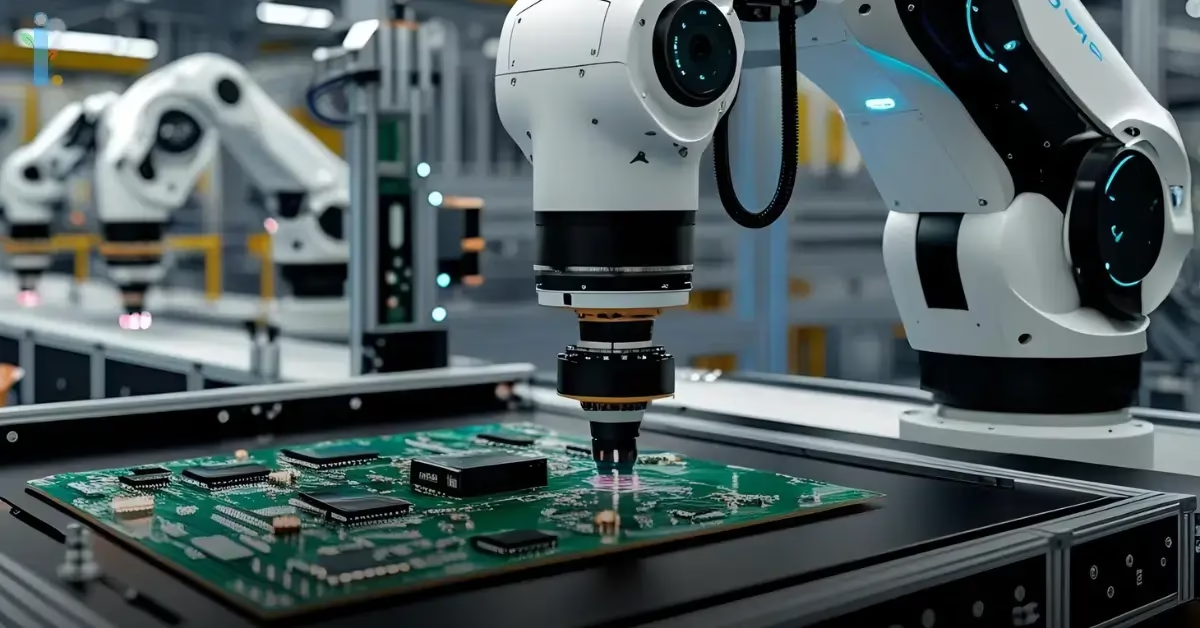
Robots no longer operate blindly. With vision system technology, they perceive, analyze, and react to their environment—transforming factories, hospitals, and homes. This guide dives deep into how robotic "eyes" and "brains" [...]
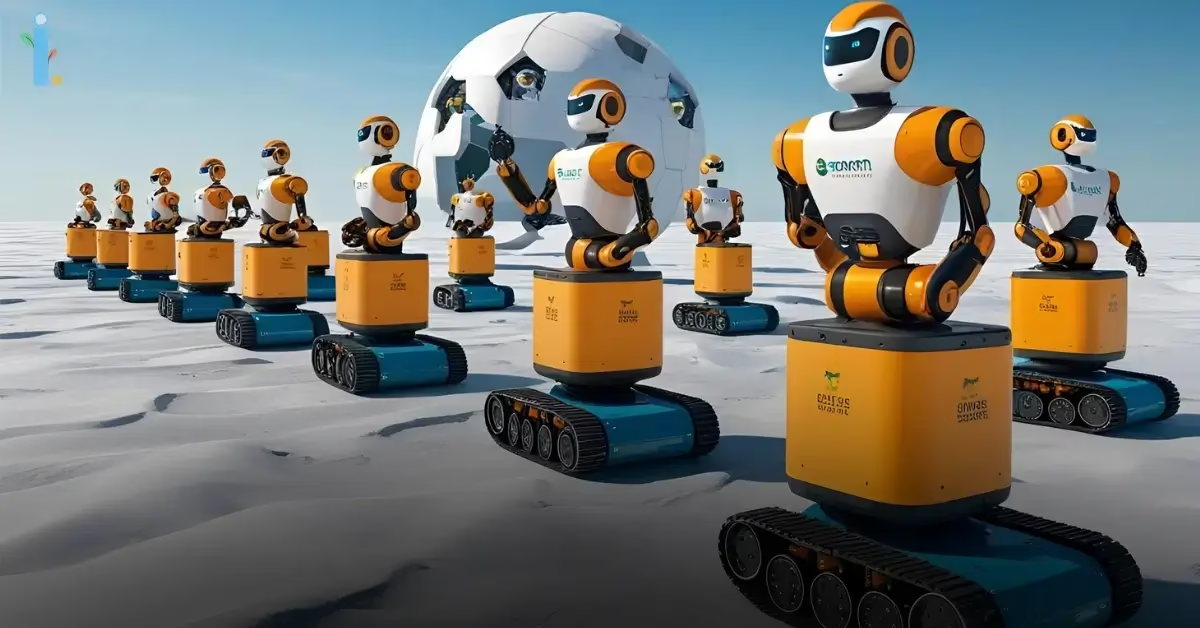
Imagine a fleet of drones working together like a colony of ants—each tiny robot making decisions based on its environment, yet collectively achieving monumental tasks. This is swarm robotics: a system [...]